This week, we’re leaving the Italian peninsula and taking a bit of a detour—traveling to Ireland by way of a New York Jewish deli.

Over the past few years, we’ve built a tradition around the Somerville St. Patrick’s Day parade. While the streets fill with green, bagpipes, and celebration, our house fills with the smell of brisket, spice, and just a little bit of smoke. It’s our own version of corned beef and cabbage—but not exactly the one you’d expect.



This year, we gathered with my sister-in-law Angela and her husband Andrew, two people we always love spending time with. Even better, the girls were home from college, which instantly makes the house feel full again. Saturday was all about cooking—slow, intentional, the kind of day where the kitchen becomes the center of everything. And Sunday? Twelve hours on the ambulance with Gabby, doing the work that always reminds me why that time around the table matters so much.
But back to the food—because this is where things get interesting.
Like most good food stories, this one starts with a bit of a myth.
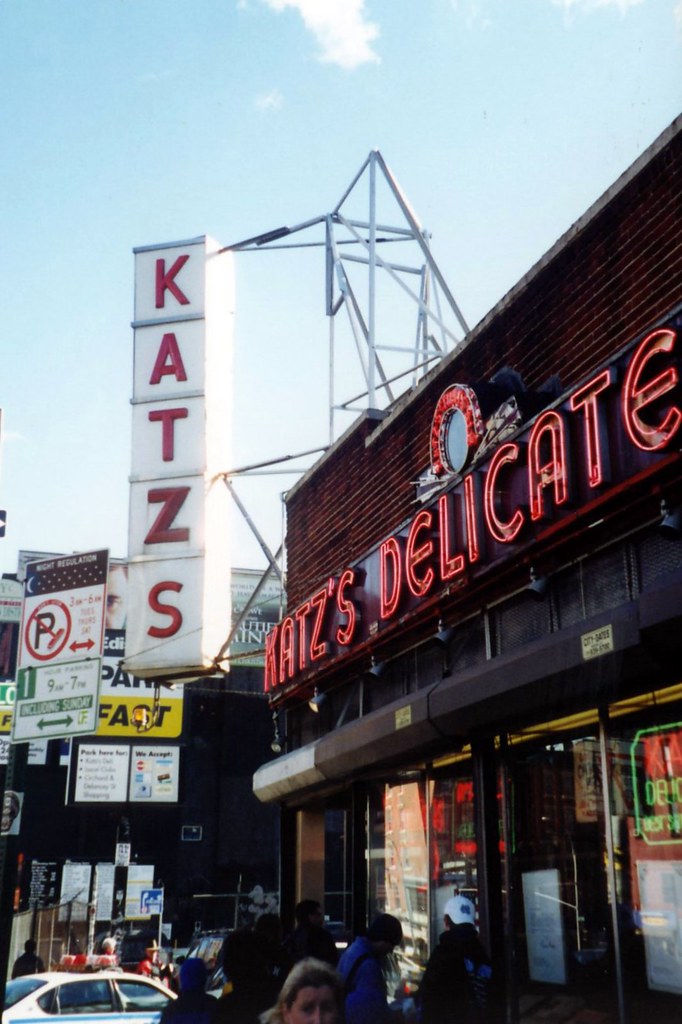
Corned beef is widely associated with Ireland, especially around St. Patrick’s Day, but historically, the Irish didn’t eat much of it. In Ireland, pork—particularly bacon—was far more common. Beef was expensive and often reserved for export. It wasn’t until Irish immigrants arrived in cities like New York in the 19th century that corned beef became a staple of their diet. Living alongside Jewish communities on the Lower East Side, they found a more affordable alternative to pork in kosher butchers—specifically, salt-cured brisket. What we now think of as “traditional” Irish corned beef is really an Irish-American story.
And then there’s the Jewish deli.
Jewish immigrants from Eastern Europe brought with them the art of curing and preserving meat, techniques born out of necessity. Pastrami, in particular, traces its roots back to Romania, where “pastrama” was made by curing and seasoning meat, then smoking it to preserve it. When that tradition arrived in New York, brisket became the cut of choice, and the pastrami we know today—peppery, smoky, deeply flavorful—was born.
So somewhere between Ireland and Eastern Europe, New York created something entirely its own.
That’s where our tradition lives.
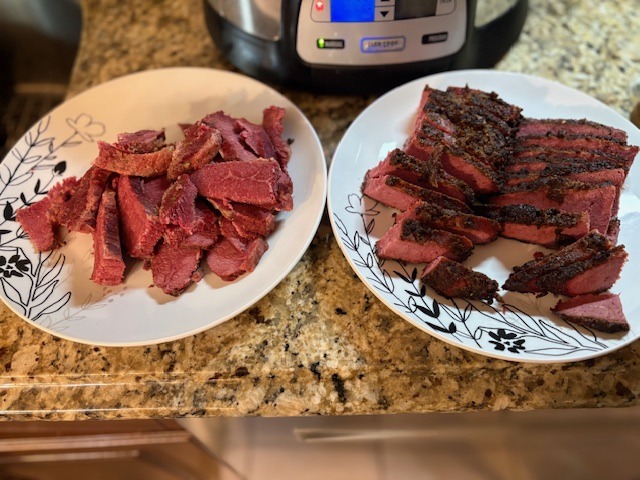
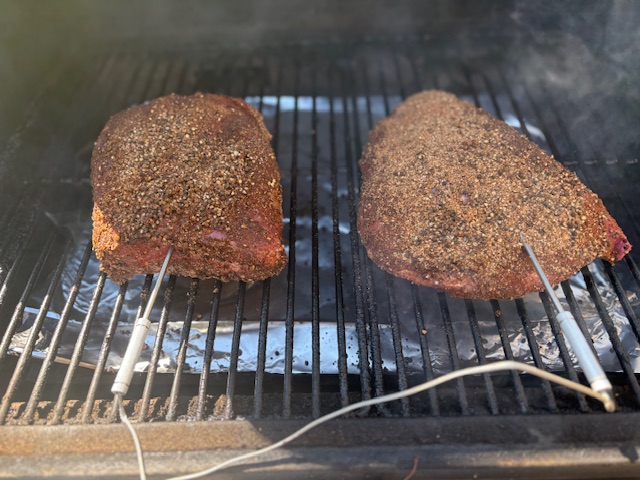
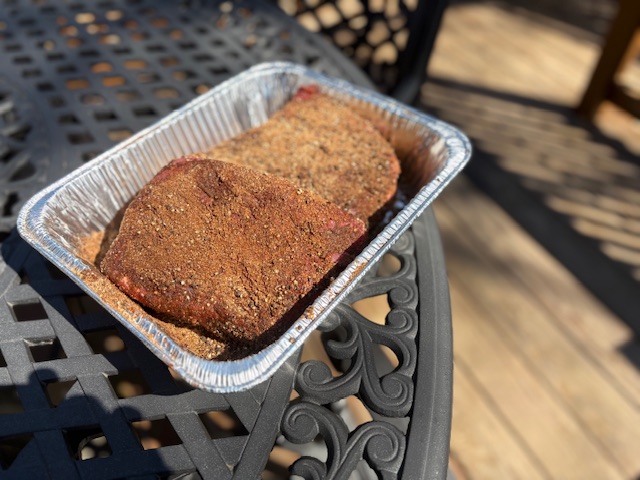
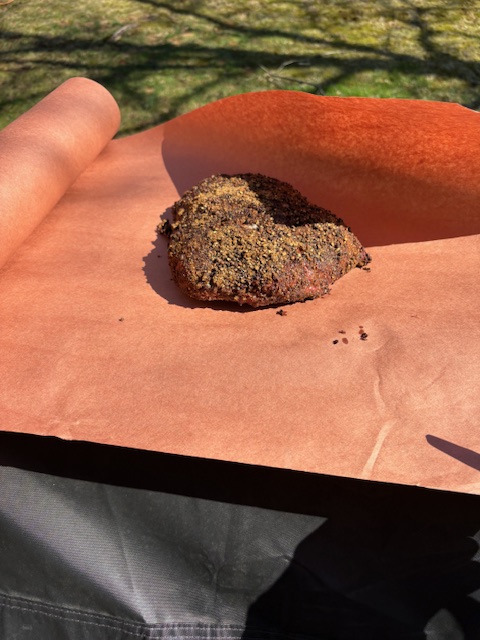
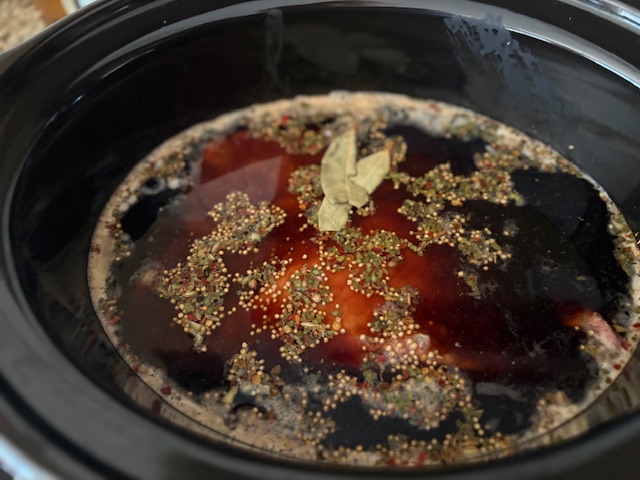
Every year, I smoke a brisket—this year, two—coated in a pastrami-style seasoning, letting it sit low and slow until it develops that perfect bark. Alongside it, I make a corned beef, but not boiled. I’ve never been a big “boiled meat” guy. Instead, I cook it gently with Guinness, beef broth, and pickling spices, building layers of flavor that feel just a little more… intentional.
But we don’t stop there.
Because if you’re going to lean into the deli, you go all in.
Out comes the rye bread. The Russian dressing. Swiss cheese. And, of course, a proper spread of deli pickles on the side. At first glance, you’d think we’re making Reubens—and you wouldn’t be wrong—but here’s where we make it our own.
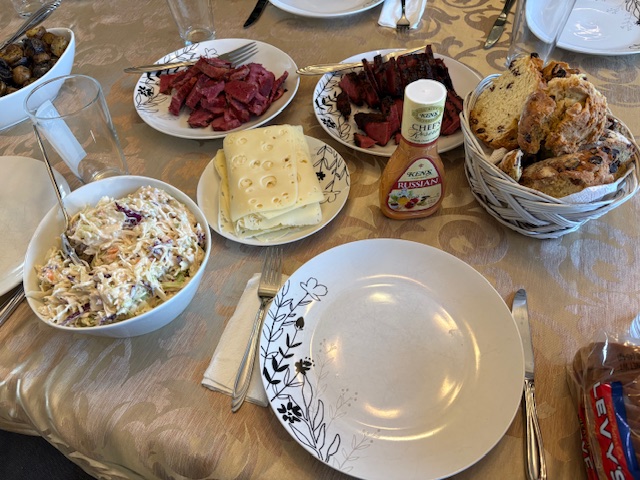
Instead of sauerkraut, I make a coleslaw with a bit of a kick.
That one small change shifts the entire identity of the sandwich. What most people don’t realize is that once you swap sauerkraut for coleslaw, you’re no longer eating a Reuben—you’re eating a Rachel. And if you take it one step further and leave off the Swiss cheese, you’ve entered even more obscure territory: what’s sometimes called a Philadelphia Special.
Food has a funny way of doing that—small changes, new names, different stories.
But at the end of the day, it’s not really about what you call the sandwich.
It’s about the table.
It’s about a kitchen full of noise, a house that feels full again, and the kind of meal that stretches a little longer because no one’s in a hurry to leave. It’s about traditions that don’t have to make perfect sense—Irish by way of a Jewish deli, smoked brisket instead of boiled beef—but somehow feel exactly right.
And maybe it’s also about what comes next.
Because the following day, Gabby and I spent twelve hours on the ambulance, and without getting into the details, it was one of those days where you know you made a difference. The kind of day that reminds you why you do it.
And maybe that’s the connection.
Good food. Good people. Doing some good where you can.
Not a bad way to spend a weekend.
Smoked Pastrami-Style Brisket
Let’s get one thing out of the way—I’m not curing my own brisket. I respect the craft, but I also respect my time. A good store-bought corned beef works just fine here and becomes something pretty incredible once it hits the smoker.
Pastrami Rub
- 1/4 cup very coarse ground black pepper
- 2 tablespoons coriander seeds
- 1 teaspoon mustard seeds
- 1 tablespoon turbinado sugar
- (Optional: add a little brown sugar for a deeper molasses note)
- 2 teaspoons paprika
- 1 1/2 teaspoons granulated garlic
- 1 1/2 teaspoons granulated onion
- 1 teaspoon ancho chili powder
Mix everything together and coat the corned beef generously.
Instructions
Smoke at 225°F until the internal temperature reaches about 165°F (you’ll hit the stall—be patient).
Wrap in butcher paper (or foil) and continue cooking until the internal temperature reaches about 205°F.
Rest, slice against the grain, and try not to eat half of it before it hits the bread.
Guinness-Braised Corned Beef
If I’m not smoking it, I’m definitely not boiling it.
Ingredients
- 1 corned beef brisket
- 3 bottles Guinness stout
- 2 tablespoons pickling spices
- Beef broth or stock (enough to fully cover the meat)

Instructions
Place everything into a slow cooker, making sure the brisket is fully submerged.
Cook on low (preferred) or high until the internal temperature reaches about 205°F and the meat is fork-tender.
Build Your Sandwich
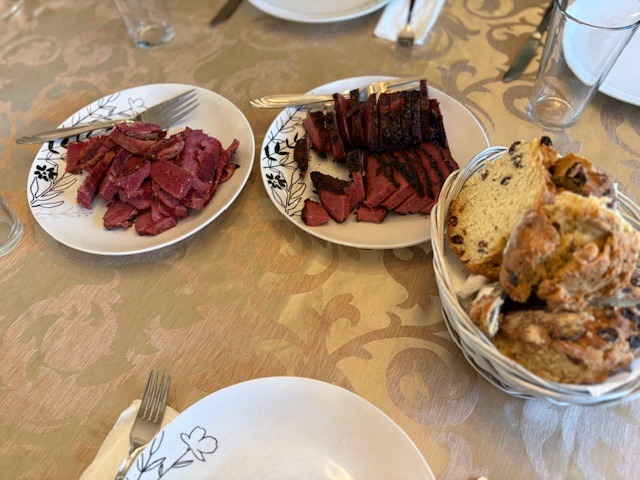
Pile it high on rye bread with Russian dressing, Swiss cheese, and your coleslaw with a kick.
Call it a Reuben.
Call it a Rachel.
Call it a Philadelphia Special.
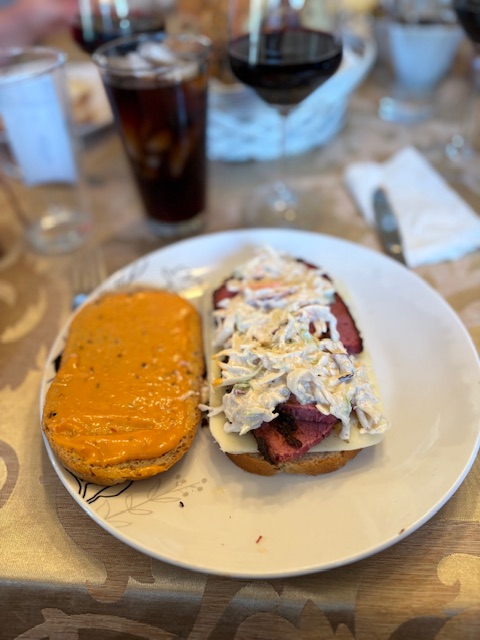
Around here, we just call it dinner.
 Adopted By Pasta
Leave a comment