The worst part of vacation is… COMING HOME!

I’ve been working through a serious case of post-vacation depression, and I figured writing about it might be cheaper than therapy. Although, considering how much I want to book another trip, the jury is still out on that one.
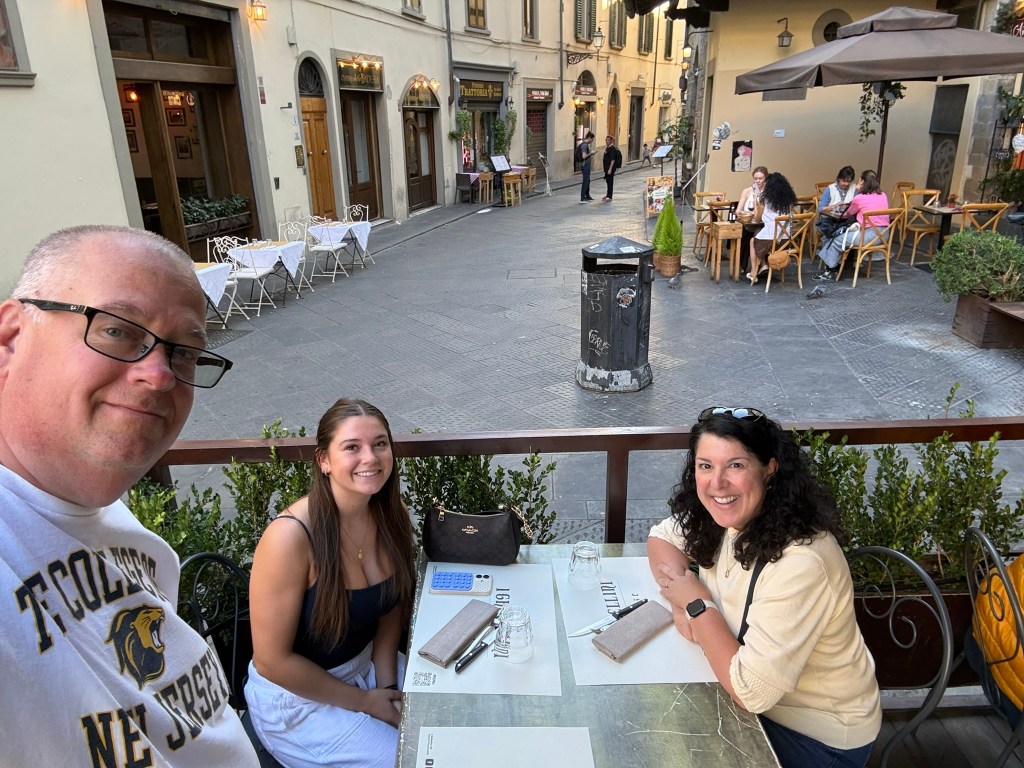
Maria and I just spent a good portion of October in Europe. Now, this was, of course, a completely necessary trip because Gabby, as you may recall from previous blogs, has been studying in Florence since August. As responsible parents, we just HAD to travel across the Atlantic to make sure she was doing okay.
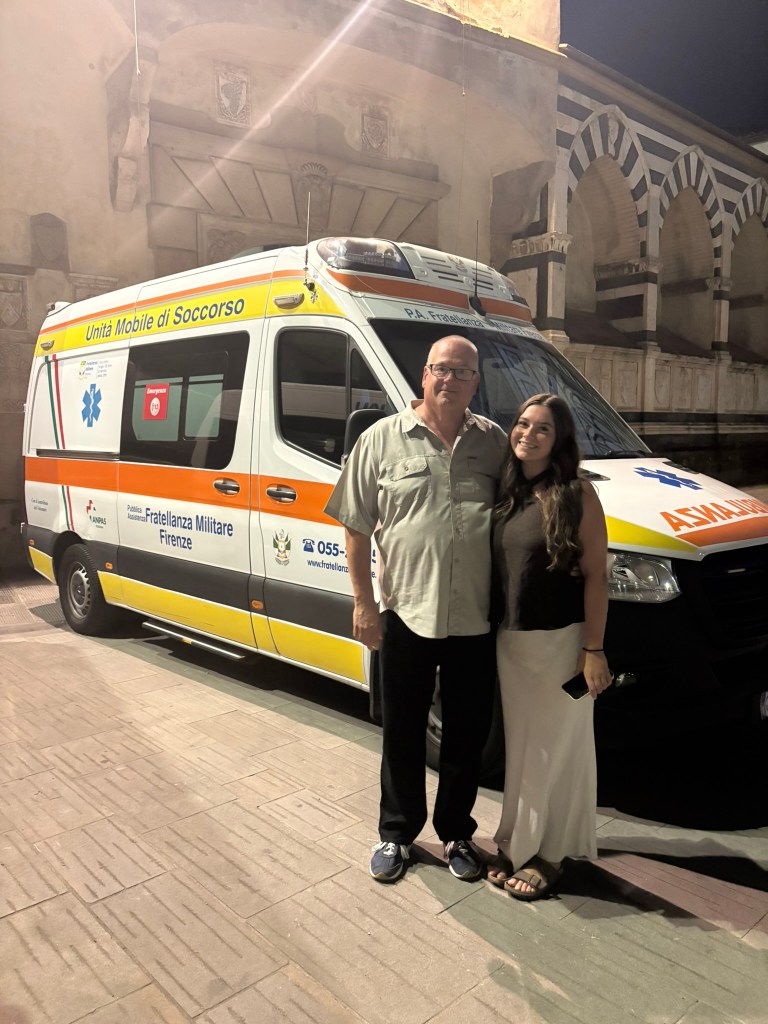
I’m happy to report that she’s surviving perfectly well with her friend Petra as the two of them jet-set around Europe. Apparently, studying abroad is a pretty tough gig!
But there was another reason this trip was special.
It had been almost two decades since Maria and I had taken a serious vacation without children. Now, to be fair, I LOVE traveling with Olivia and Gabby. Some of our greatest family memories have been made exploring new places together. But it was really nice to spend some time with just Maria, especially since we’re still, more than a year later, getting used to the girls not being around all the time.
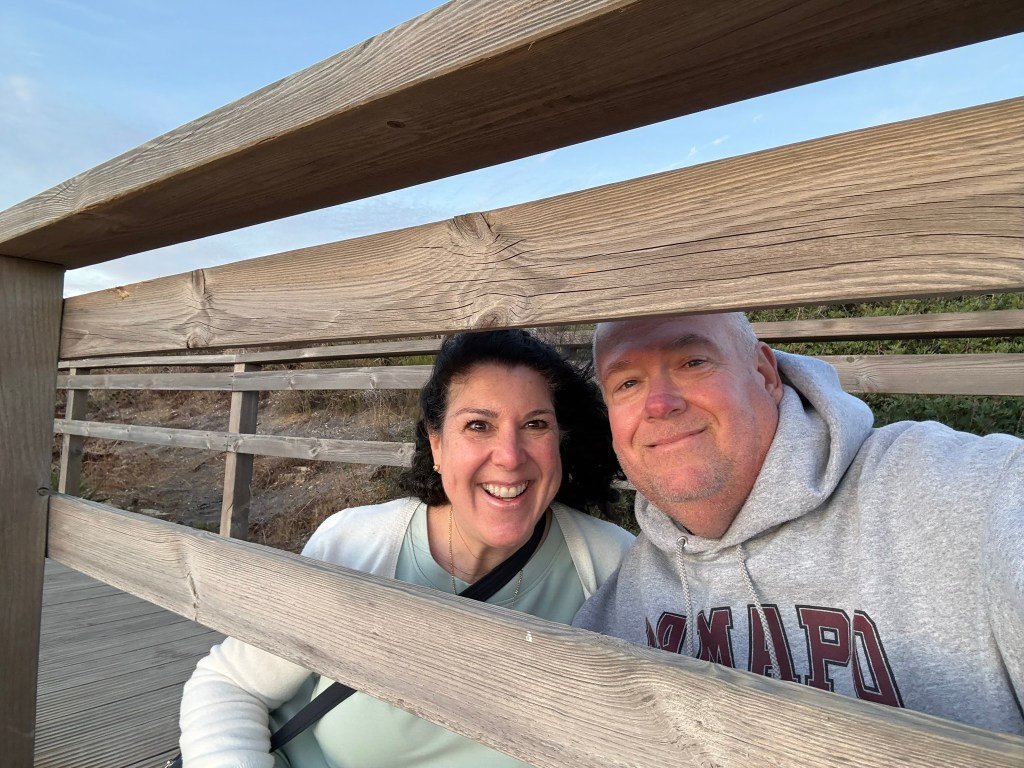
So, in addition to our visit to Florence, we decided to spend some time exploring Portugal.
And let me tell you, we fell in love!
The Algarve: Cliffs, Caves, and Cataplana
Our first stop was the Algarve, the beautiful coastal region in southern Portugal.
Now, getting there required a three-hour drive from Lisbon Airport, which, as I painfully discovered, is a pretty boring stretch of highway. But hell, we had a pretty swank Volvo to tool around in, so at least we were traveling in style!

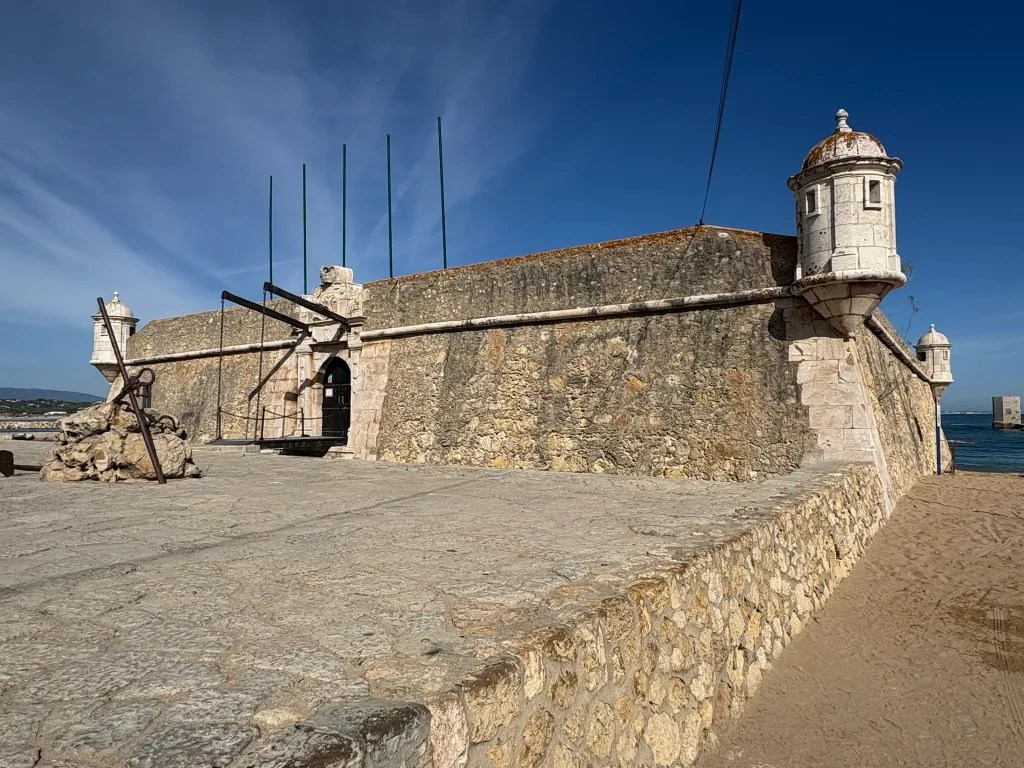
We made our home base in Lagos, a historic port city with deep connections to Portugal’s Age of Discovery. During the 1400s, this region played an important role in the maritime expeditions associated with Prince Henry the Navigator, when Portuguese sailors began venturing farther down the African coast and eventually helped usher in an era of global exploration.
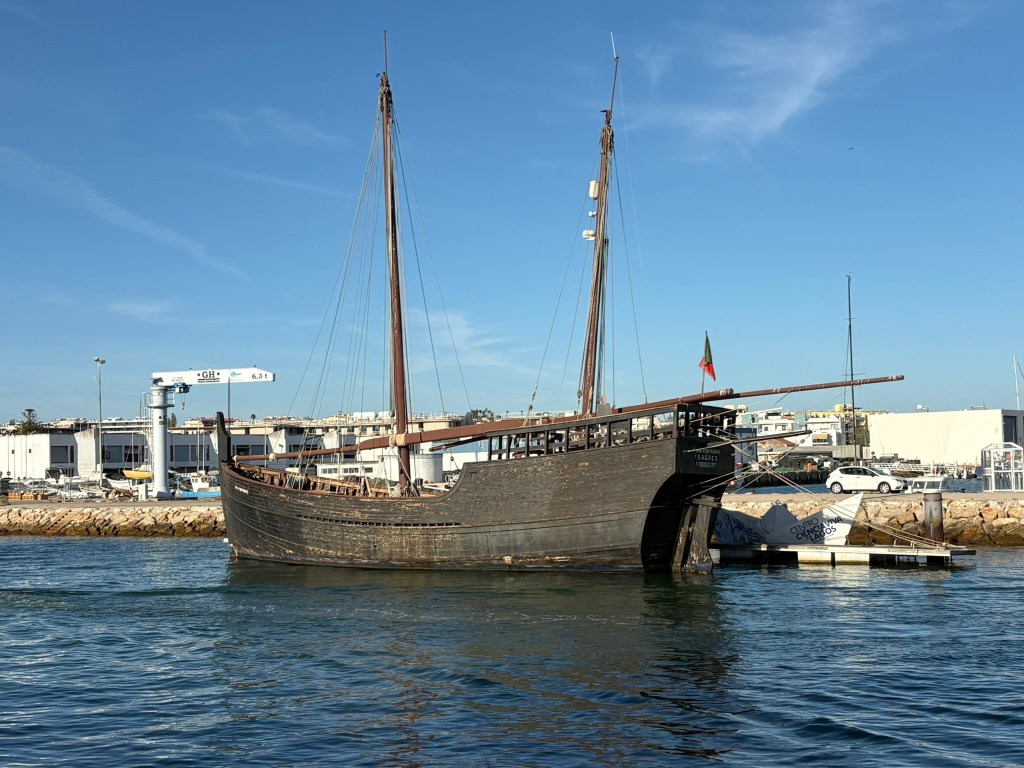
But history aside, the Algarve is simply STUNNING.
Picture towering golden limestone cliffs dropping into the greenish-blue waters of the Atlantic Ocean. Hidden beaches tucked between massive rock formations. And caves carved into the coastline by thousands upon thousands of years of wind, water, and erosion.
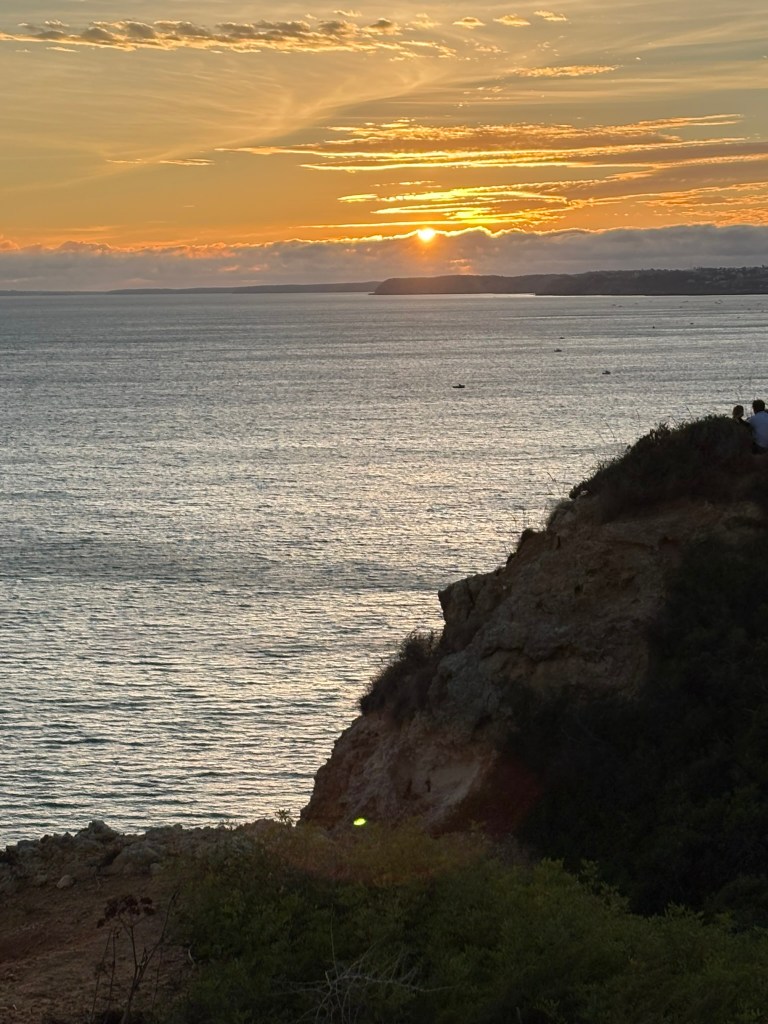
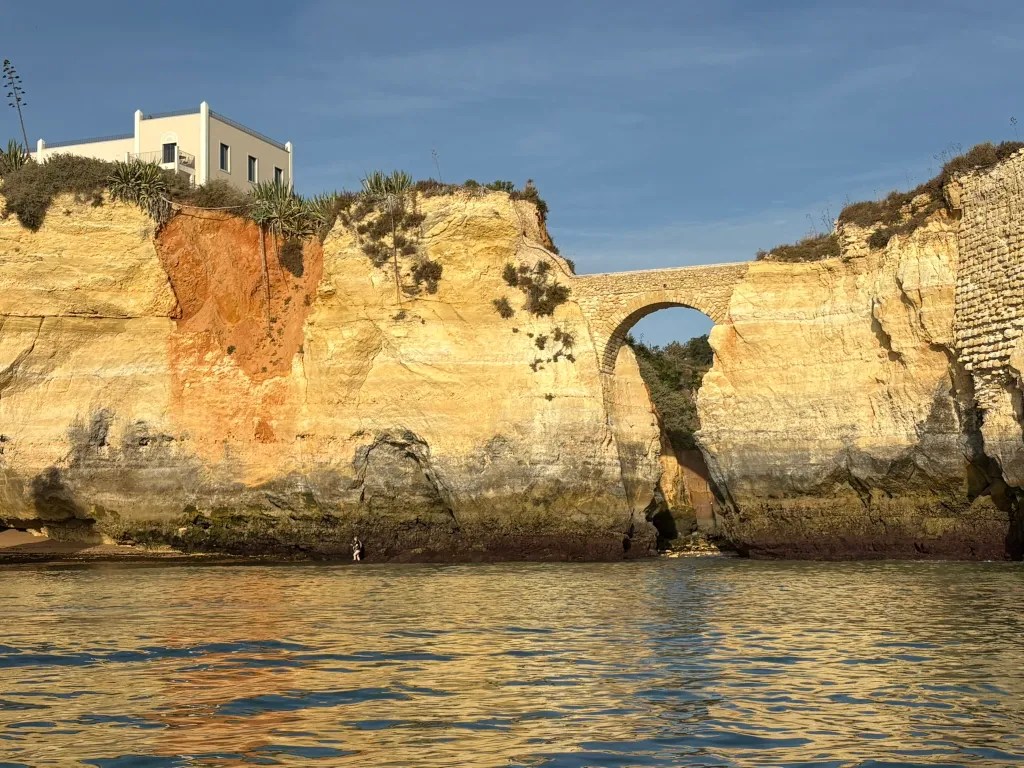
We had the opportunity to see these formations from sea level during a boat excursion, and I can tell you that photographs simply don’t do them justice.
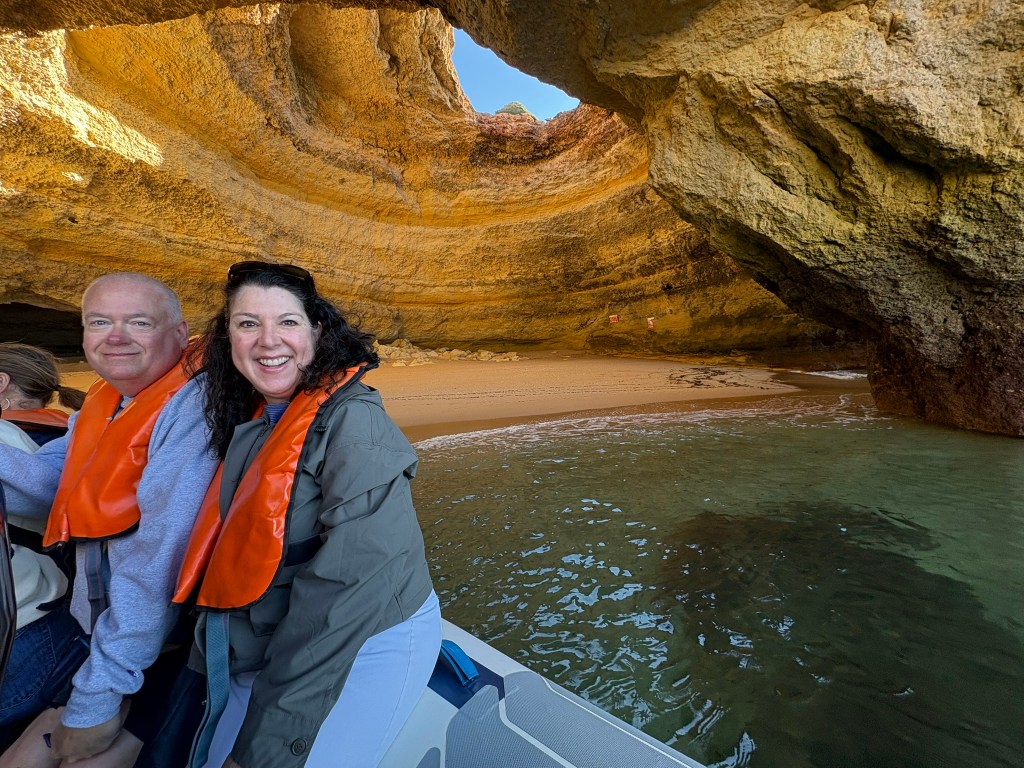
Every turn revealed another cave, another archway, another seemingly impossible formation that was even more beautiful than the last.
It’s almost as if the sea, earth, and air spent millennia collaborating on their own spectacular art exhibit.

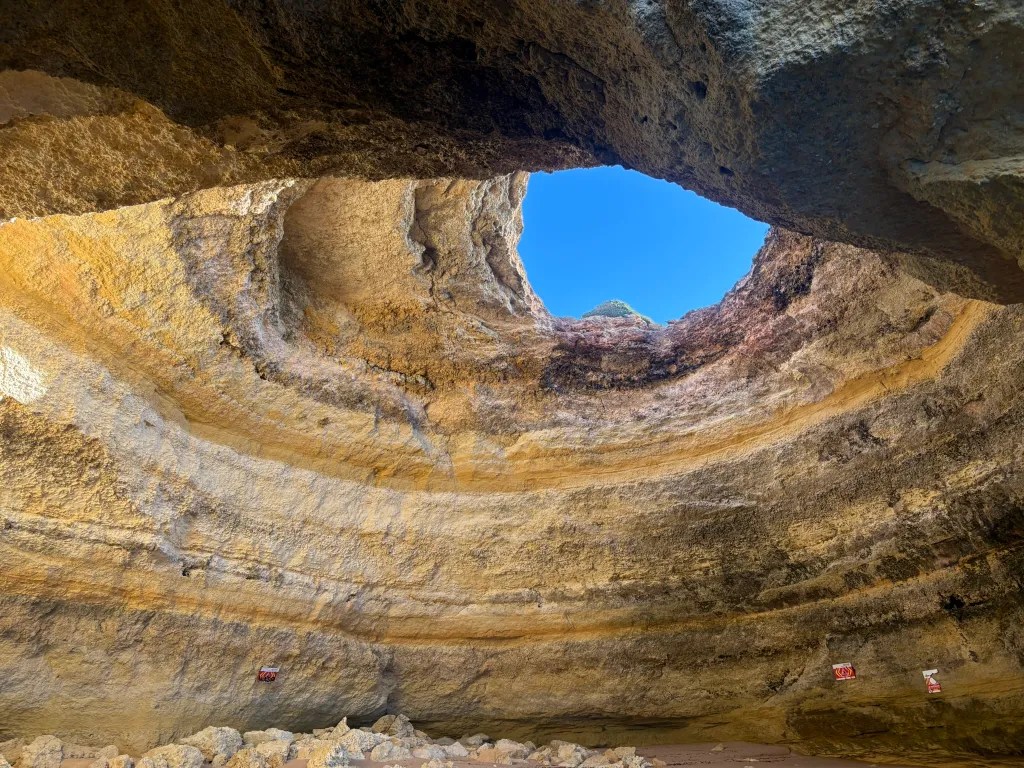
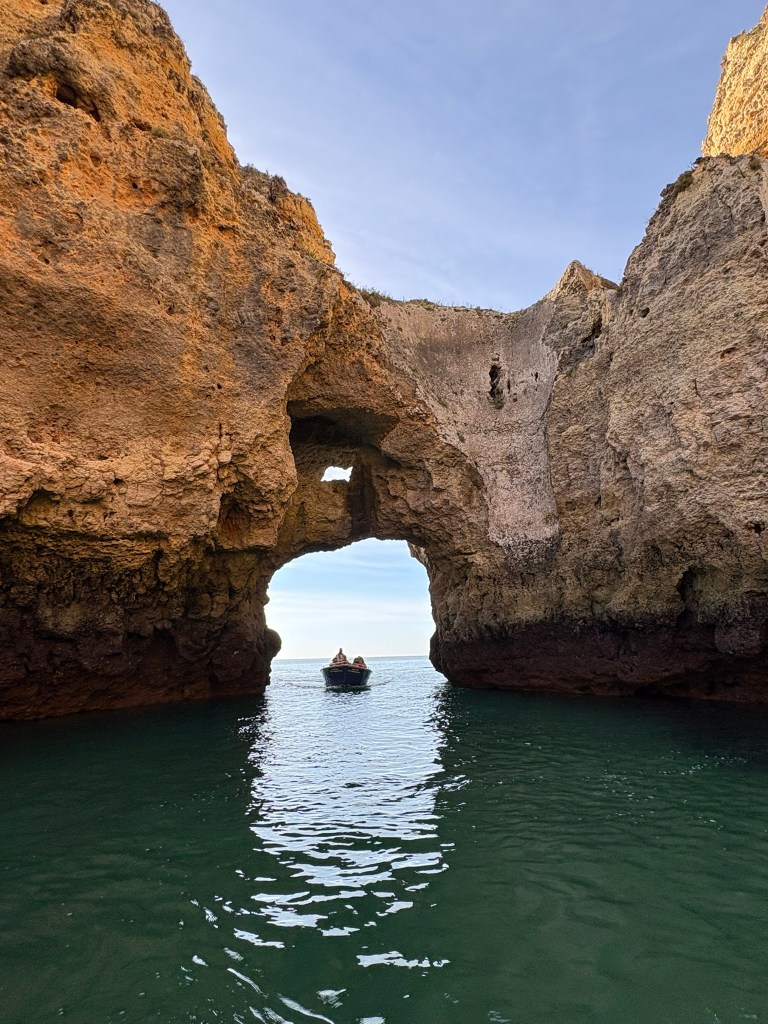
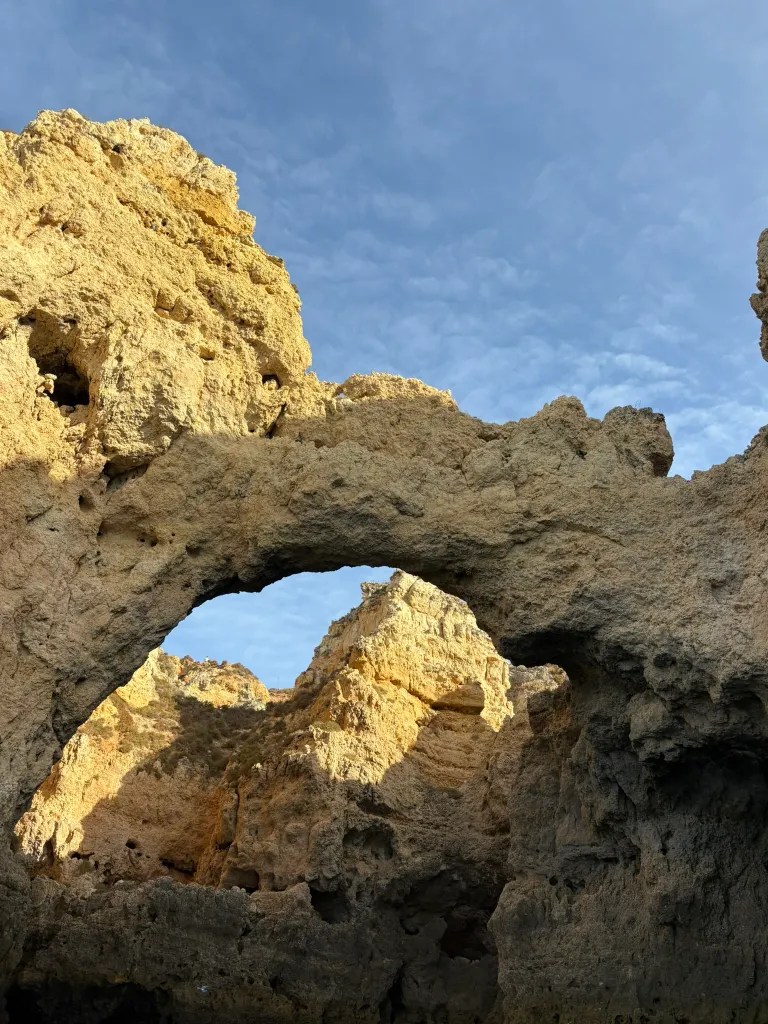
And unlike most museums, this one lets you arrive by boat!
The entire region gave me serious Southern California vibes. The rugged coastline, surfing culture, laid-back atmosphere, and emphasis on fresh food made it feel like a European cousin of the California coast.
Except, of course, with centuries-old villages and a lot more Portuguese wine!
Let’s Talk About the Food!
If you love seafood, the Algarve might just be your version of heaven.
Fresh prawns, fish, clams, octopus… you name it, we ate it. And somehow, every meal seemed fresher and more flavorful than the last.
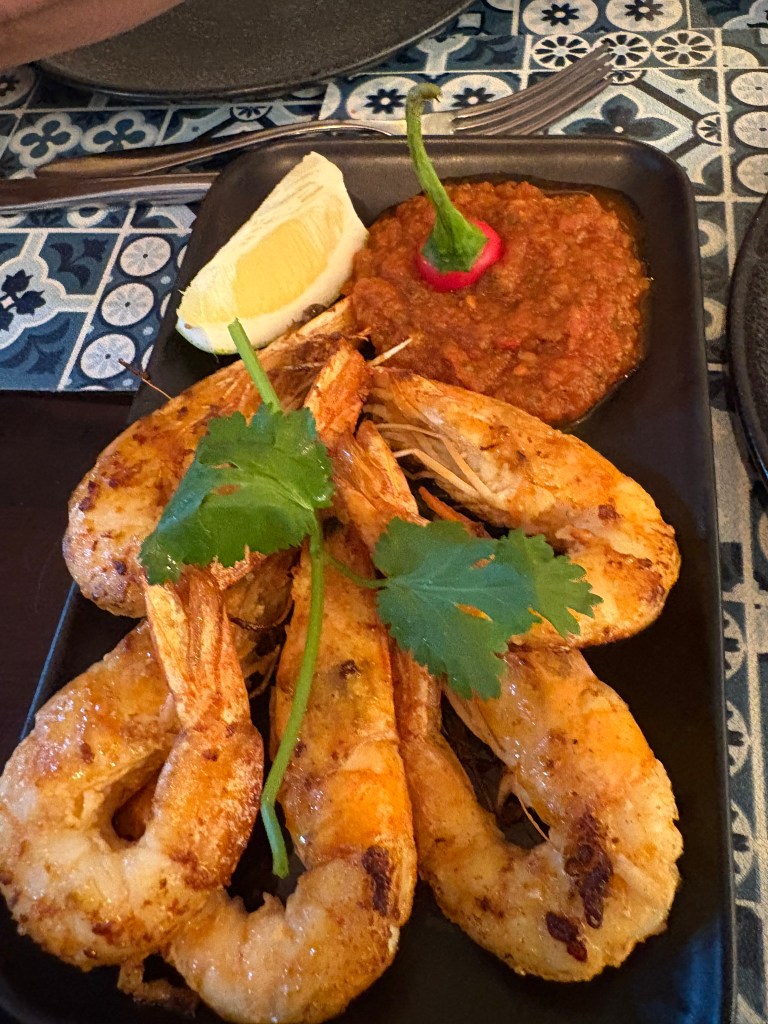
There’s something special about eating seafood just a stone’s throw from the waters where it was caught. The preparations were often beautifully simple, allowing the ingredients to do the heavy lifting.
Olive oil, garlic, herbs, a little lemon, and incredibly fresh seafood. Sometimes that’s all you need.
But the culinary star of the Algarve, at least for me, was a dish called Cataplana.
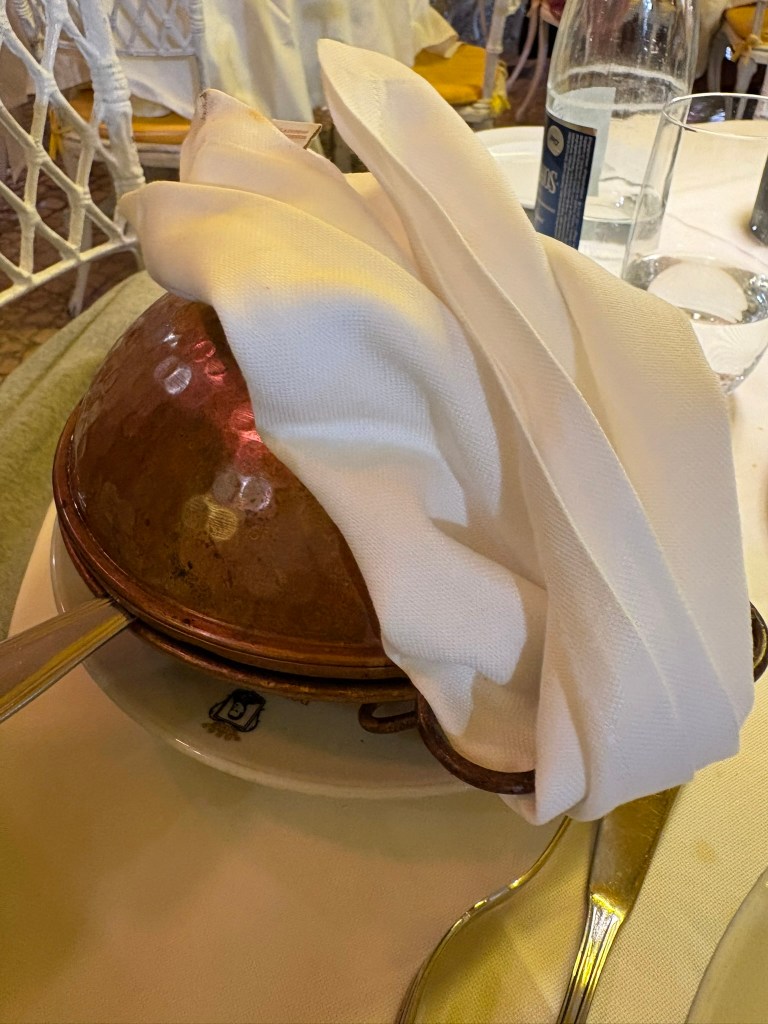
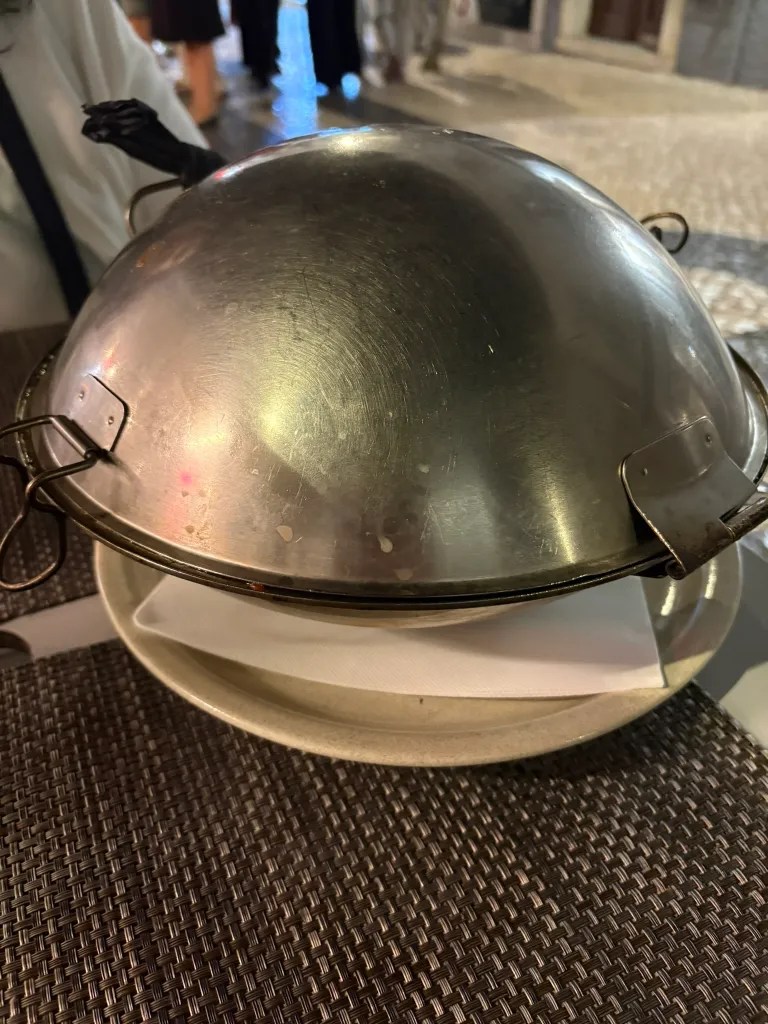
And I liked it so much that I didn’t have it once. I had it TWICE!
Cataplana is both the name of a traditional Portuguese cooking vessel and the delicious dishes prepared inside it.
The vessel itself resembles two large copper clamshells hinged together, creating a sealed cooking chamber. Its origins aren’t entirely clear, but it’s believed to have been influenced by the Moorish presence in southern Portugal centuries ago, sharing similarities with the North African tagine.
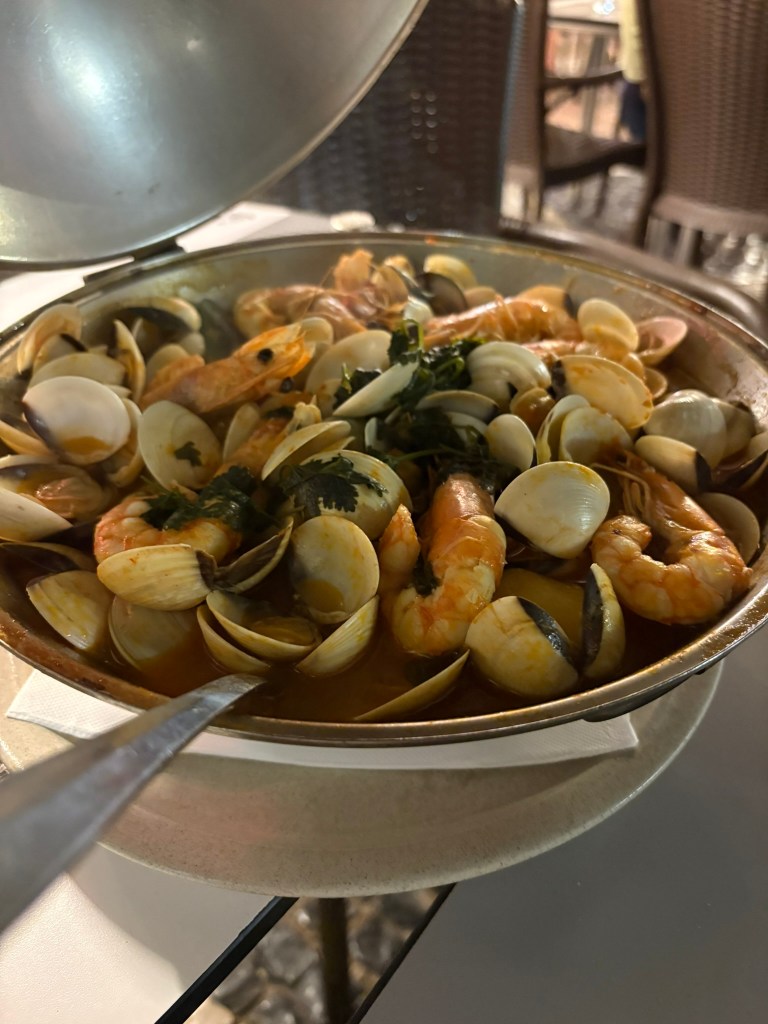
The genius of the cataplana is how it cooks. Seafood, vegetables, garlic, tomatoes, olive oil, wine, and other ingredients are placed inside, and the vessel is closed, trapping the steam and allowing all those wonderful flavors to mingle.
Think of it as a combination of steaming and stewing, where nothing delicious gets a chance to escape!
There are numerous versions, including combinations of clams, prawns, fish, monkfish, and sometimes even pork.
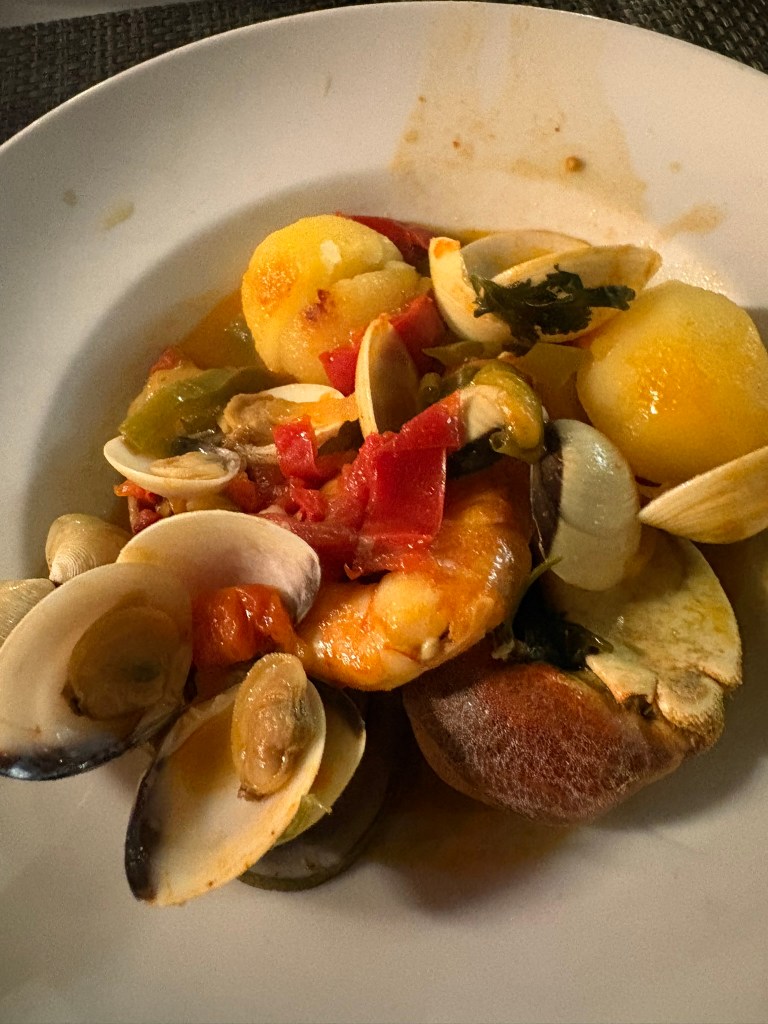
What arrives at your table is a bubbling, aromatic treasure chest of Portuguese coastal cuisine.
The broth alone is worth the price of admission. And if you’re not soaking it up with some good crusty bread, we probably need to have a conversation.
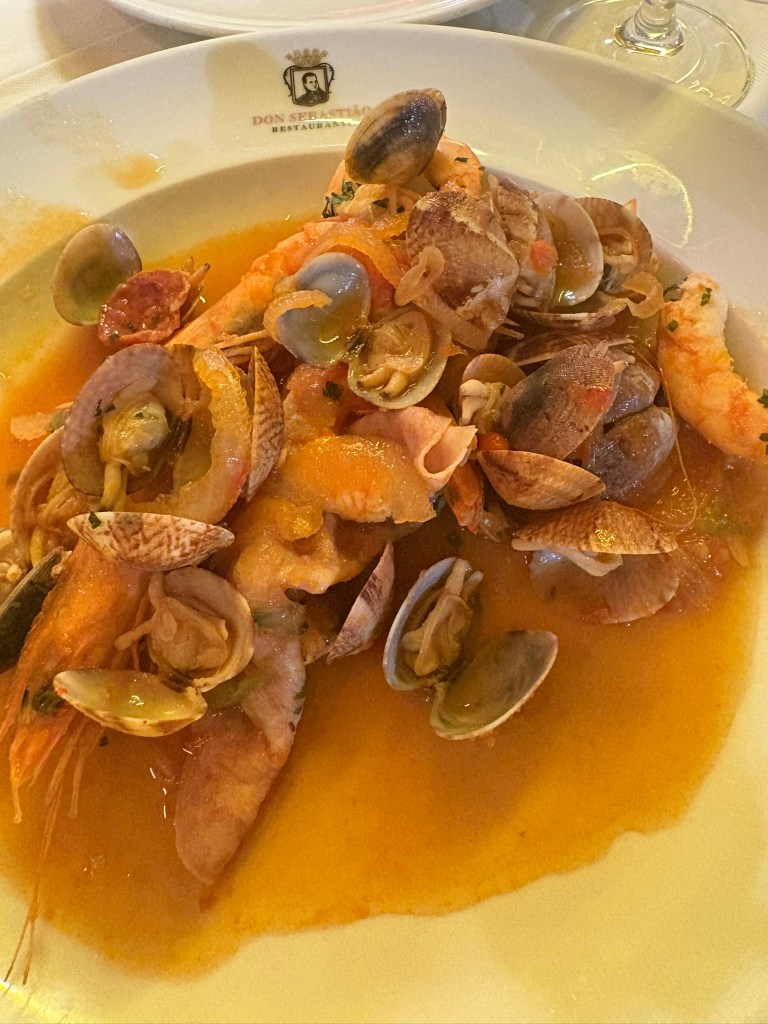
It did NOT disappoint.
Wait… Green Wine?
Another discovery during our time in the Algarve was something called Vinho Verde.
Now, Vinho Verde literally translates to “green wine,” which naturally led me to wonder what exactly we were about to drink.
I’m happy to report that the wine is NOT actually green!
The name refers to the wine’s youthful character and the lush, green region of northwestern Portugal where it’s produced. Despite our discovery of it in the Algarve, Vinho Verde actually comes from the opposite end of the country.
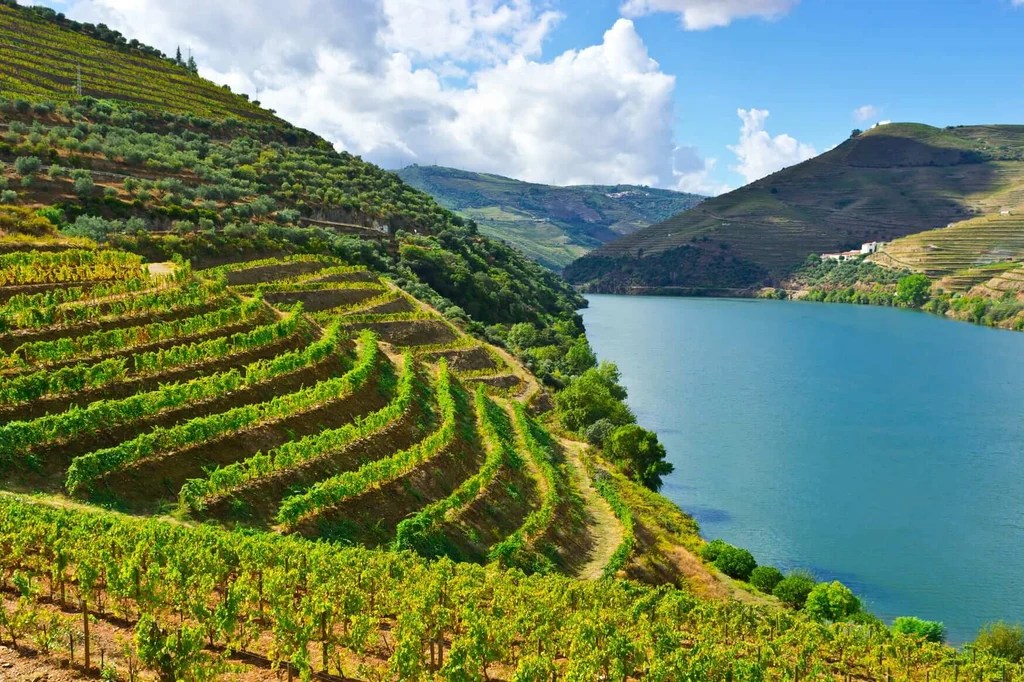
It’s generally made to be enjoyed young and fresh, and the white versions we enjoyed were light, crisp, refreshing, and just slightly effervescent.
Think citrus, bright acidity, and a delicate little fizz that makes it incredibly easy to drink.
Especially when you’re sitting outside enjoying fresh seafood and watching the world go by.
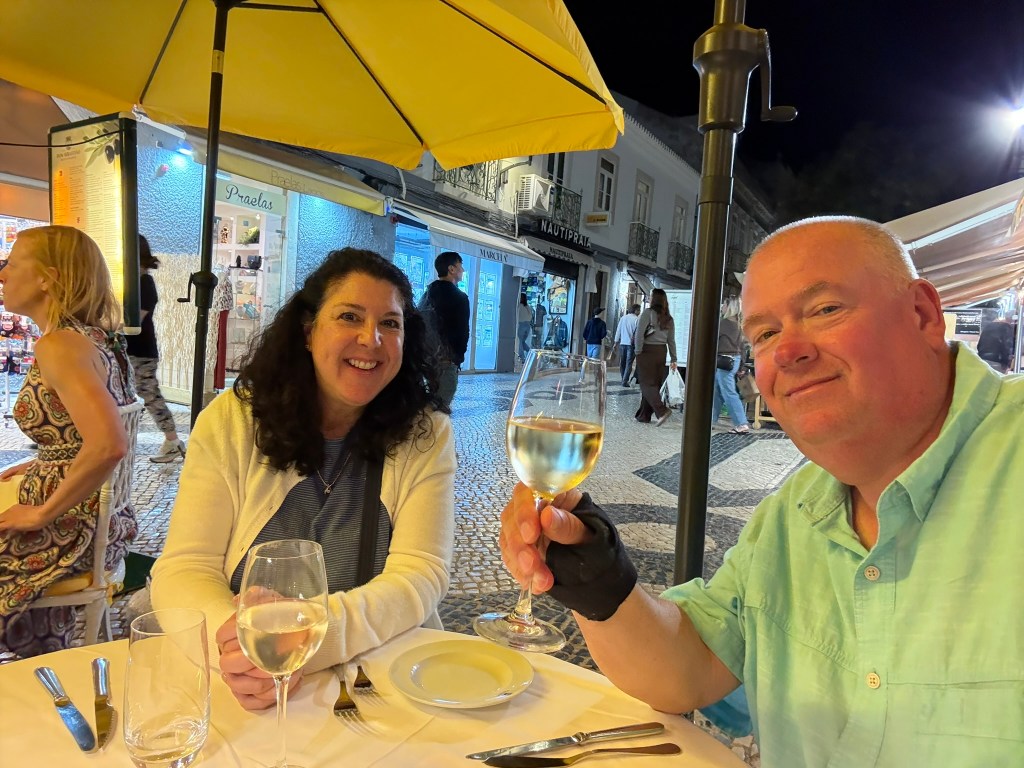
We enjoyed it so much that I made it a personal mission to find some when we returned home.
Mission accomplished.
There are currently three bottles sitting in my wine fridge, waiting for me to pretend I’m back in Portugal.
Lisbon: History, Hills, and Some Seriously Good Chicken
After a few glorious days in the Algarve, we climbed back into our trusty Volvo and made the three-hour trek north to Lisbon.
And what a contrast!
Where the Algarve was laid-back and coastal, Lisbon was urban, energetic, historic, and full of hustle and bustle.
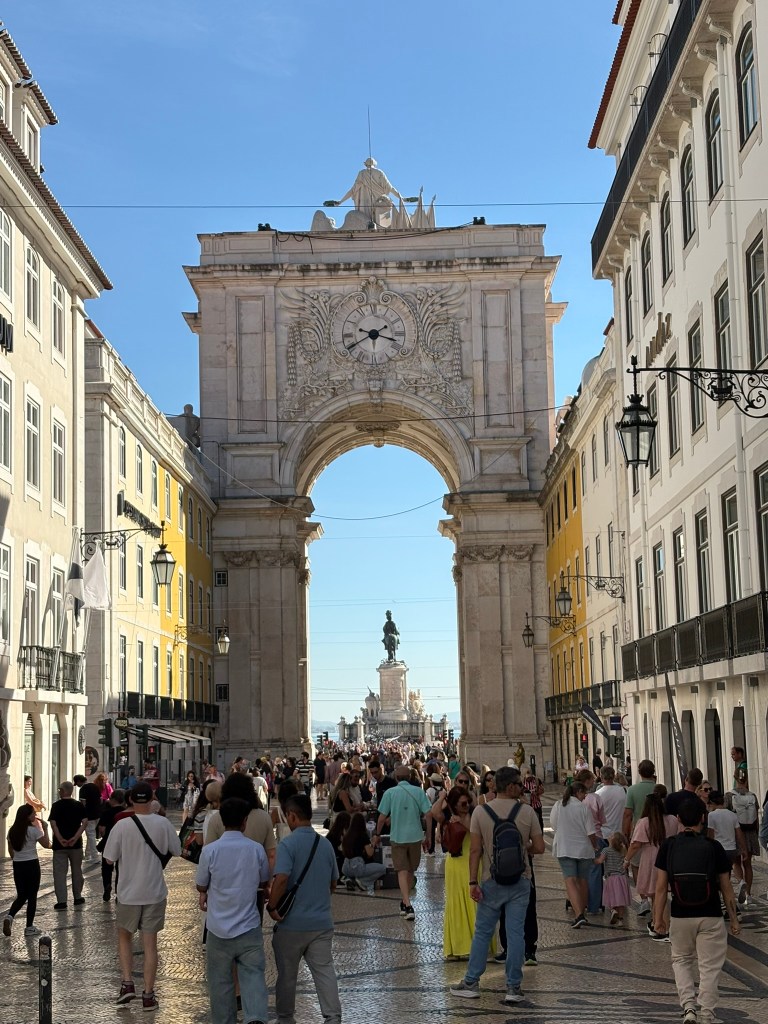
And HILLS.
Lots and lots of HILLS.
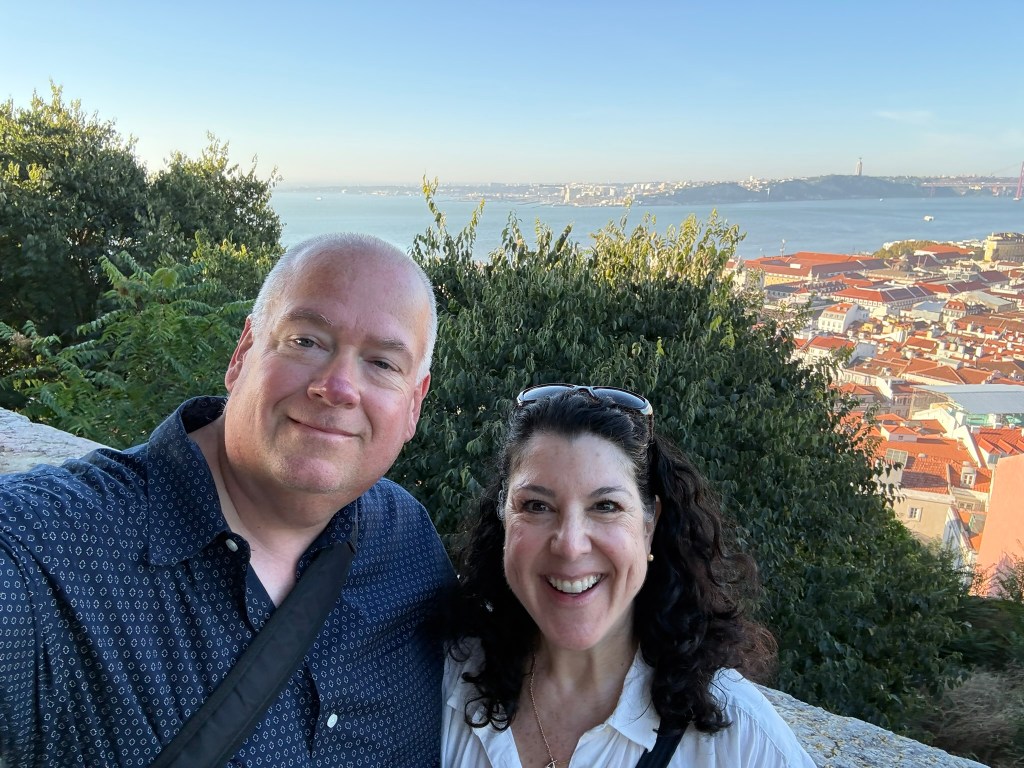
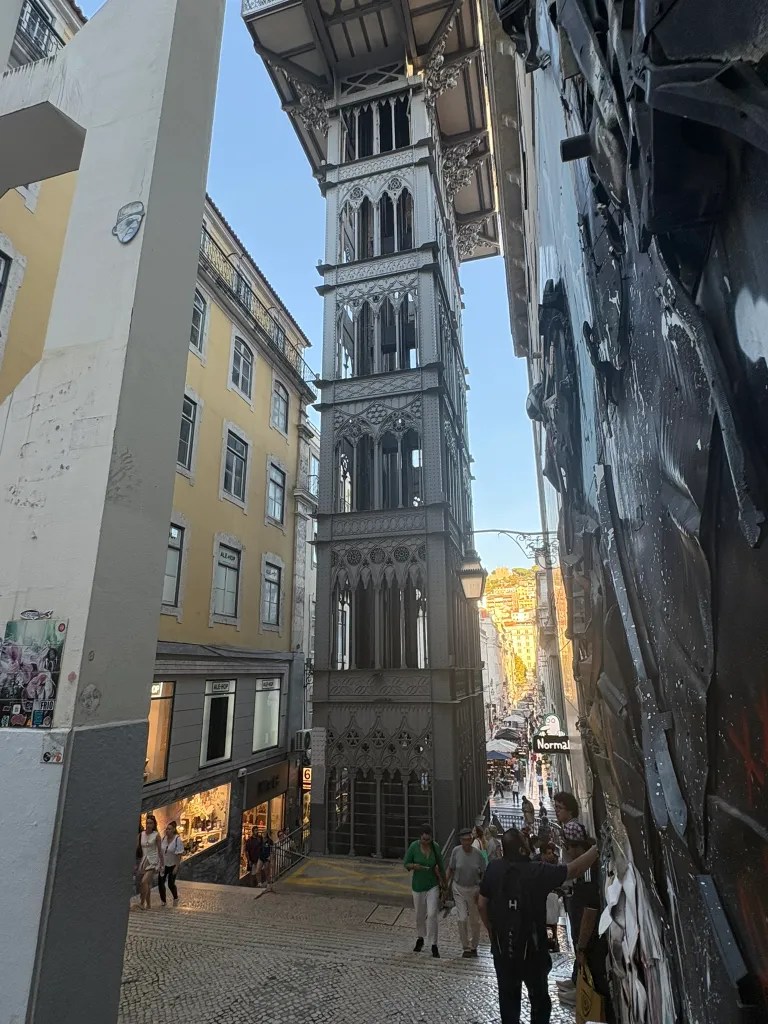
I’m pretty sure even when we were walking downhill, we were somehow still walking uphill.
Lisbon is one of Europe’s oldest cities, with a history shaped by Phoenician traders, Romans, Moors, and eventually the Portuguese monarchy. It grew into one of the world’s great maritime capitals during the Age of Discovery, when Portuguese explorers sailed from the banks of the Tagus River to chart new trade routes across the globe.
Of course, Lisbon’s history hasn’t always been kind.
In 1755, a catastrophic earthquake, followed by a tsunami and devastating fires, destroyed much of the city. The rebuilding that followed helped create the grand avenues, orderly streets, and magnificent squares that visitors enjoy today.
Fortunately for us, the historic neighborhoods built on Lisbon’s hills survived in various forms, meaning we got to experience their narrow streets, tiled buildings, and endless staircases firsthand.
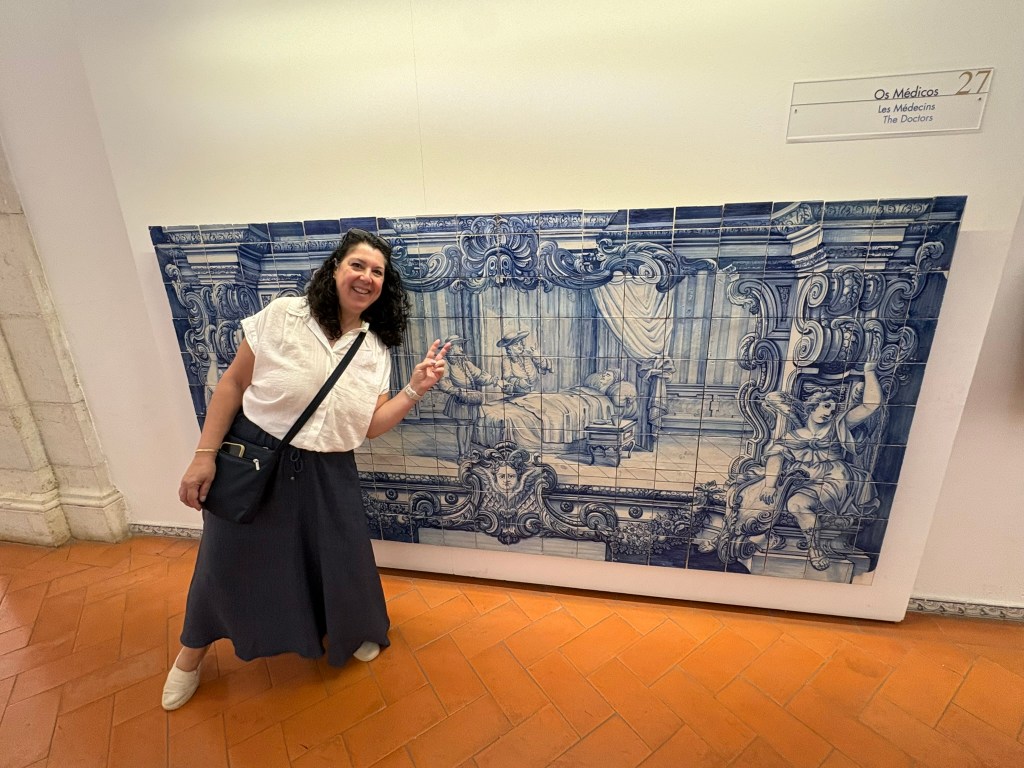
My legs are still recovering.
We explored the city from top to bottom, literally.
At the top, we visited São Jorge Castle, perched high above Lisbon with sweeping views across the city and the Tagus River.
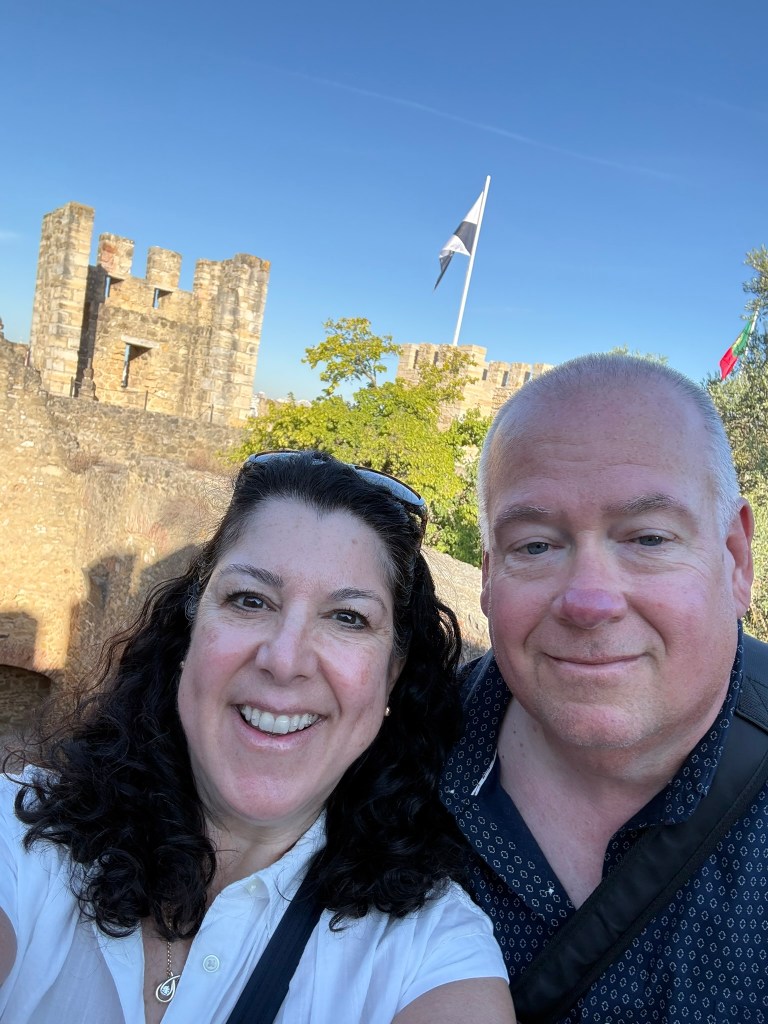
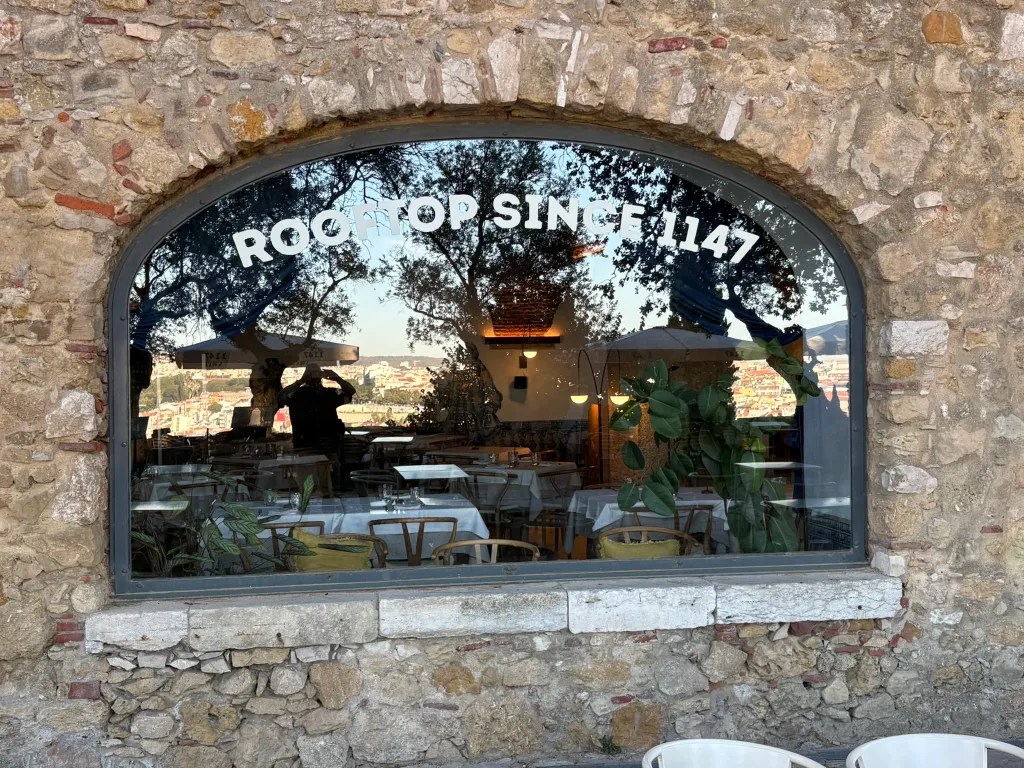
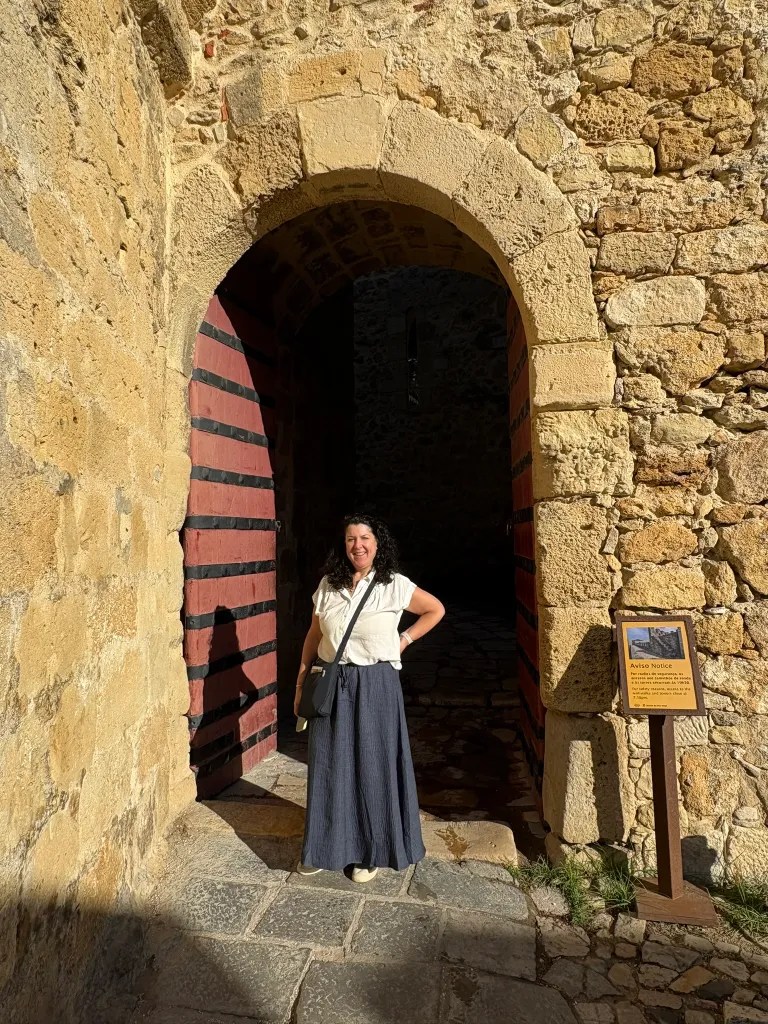
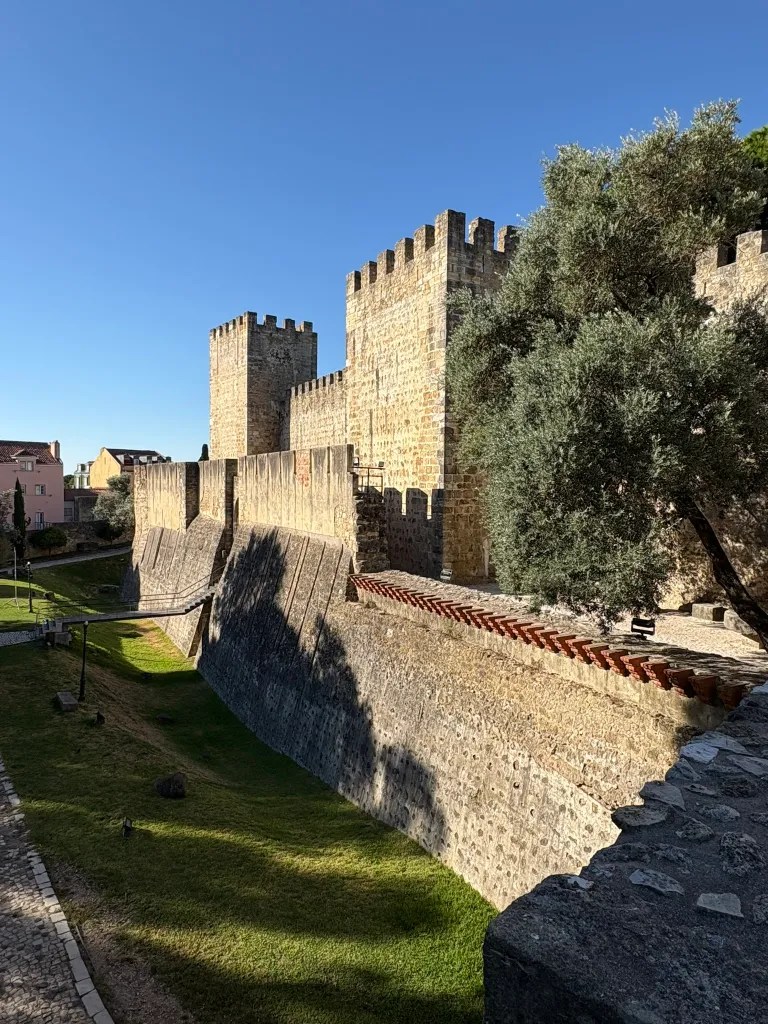
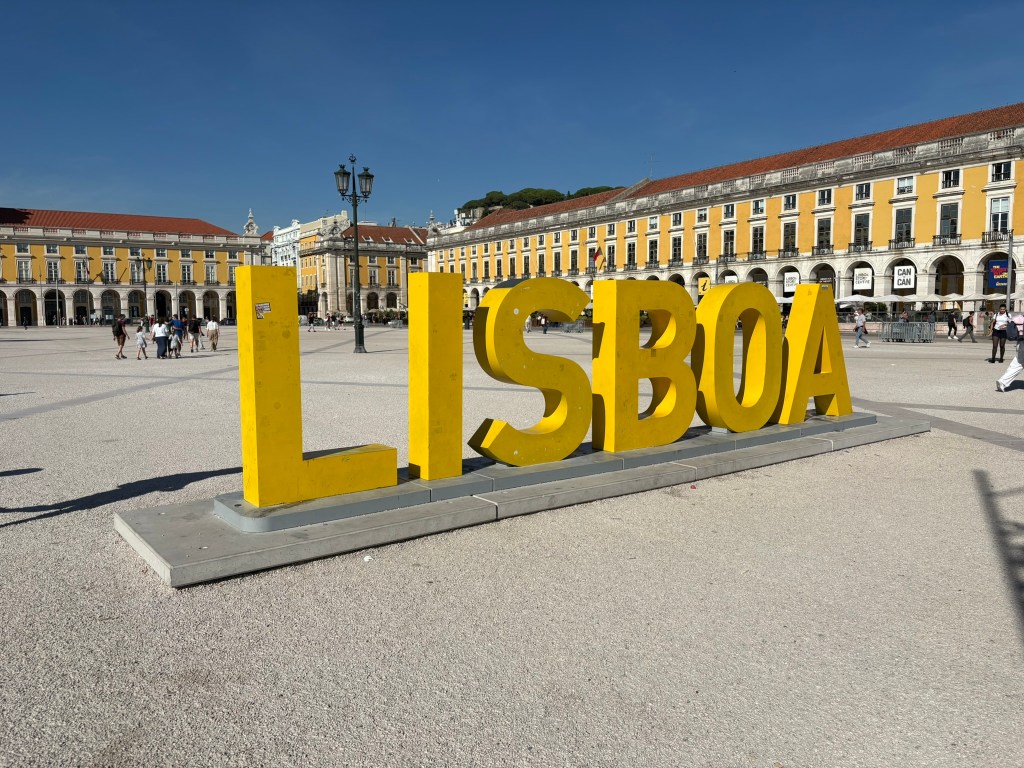
At the bottom, we wandered through the magnificent Praça do Comércio, the grand waterfront square that once served as the ceremonial entrance to Portugal’s capital.
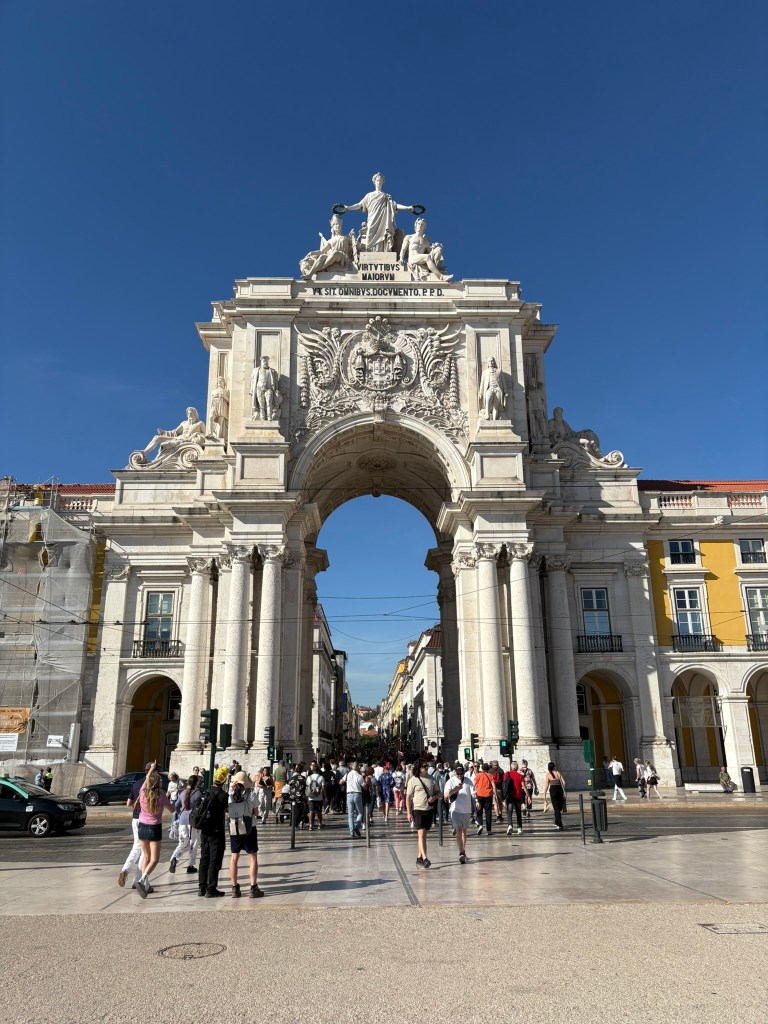
We visited the Monument to the Discoveries, honoring the explorers who helped shape Portugal’s maritime history, and saw the tomb of Vasco da Gama inside the magnificent Jerónimos Monastery.
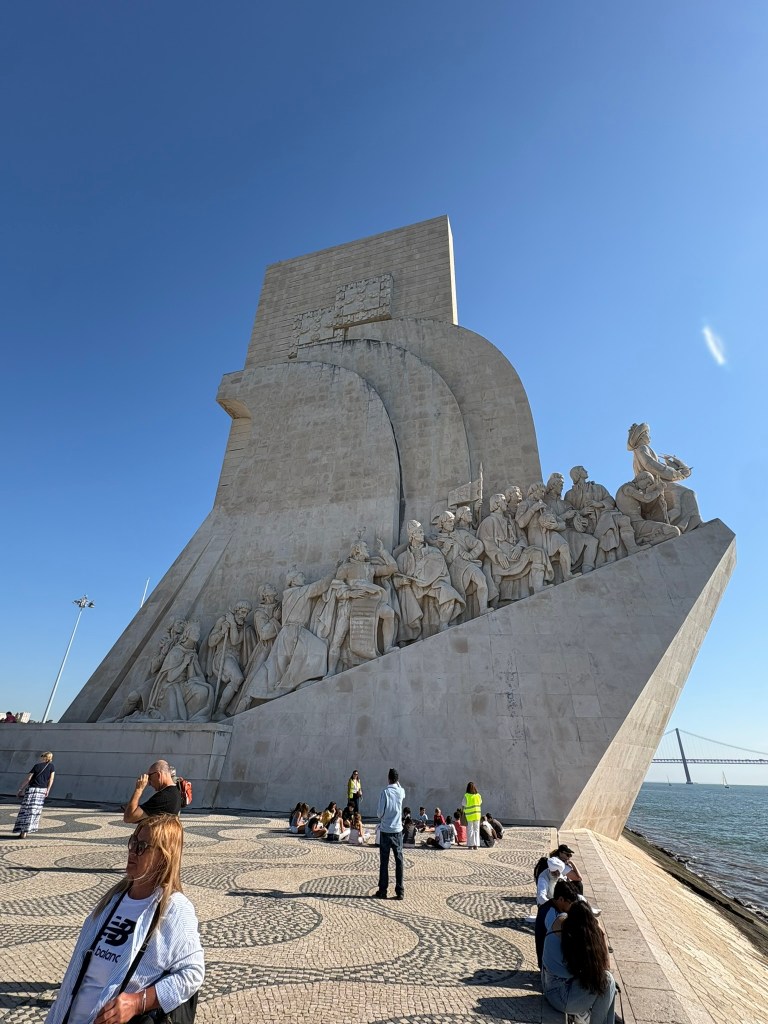
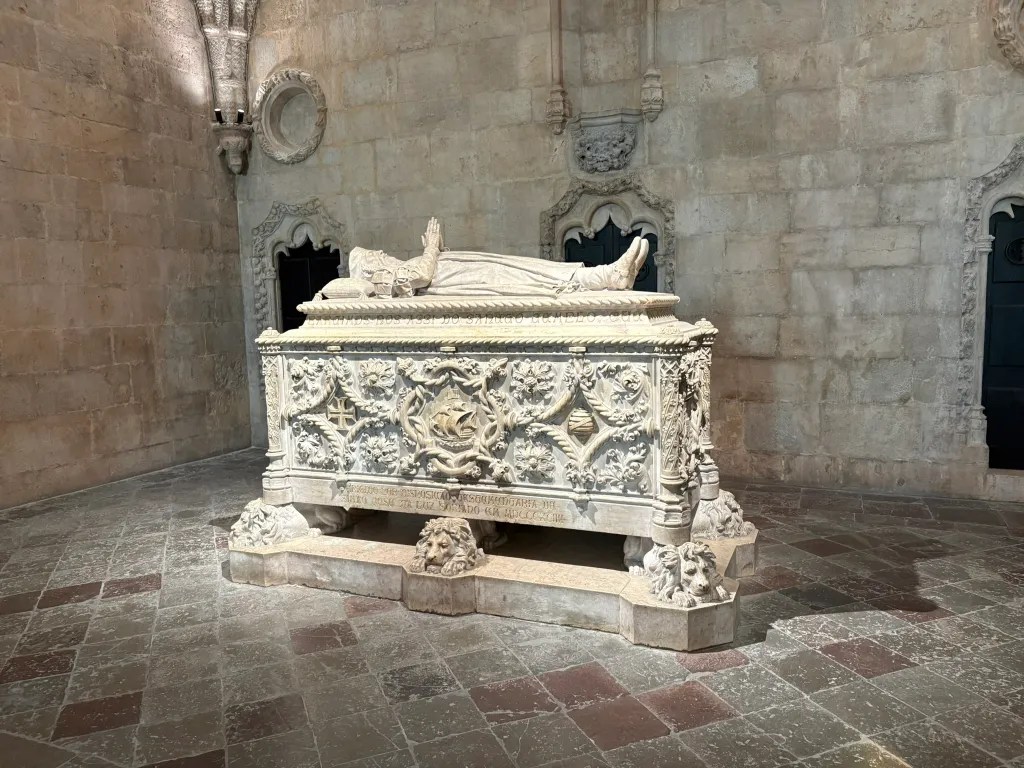
And, in a rather unexpected addition to our sightseeing, we got to watch Lisbon’s hardworking firefighters extinguish a house fire.
Now, given my background in emergency services, you know I wasn’t going to walk past THAT without stopping!
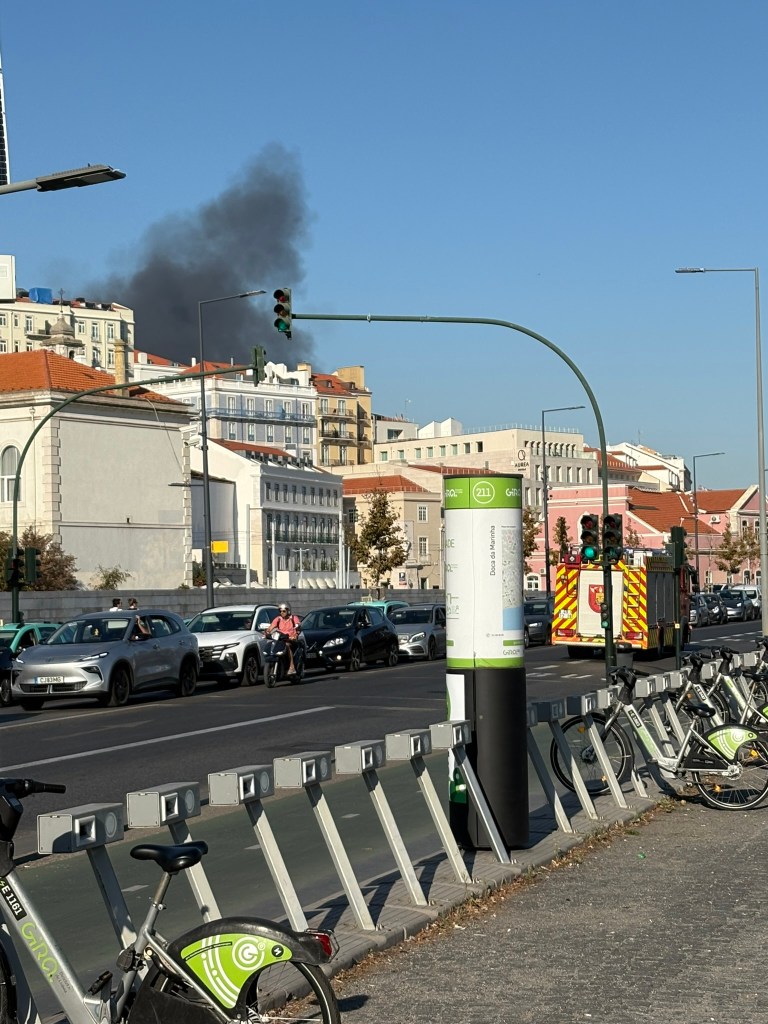
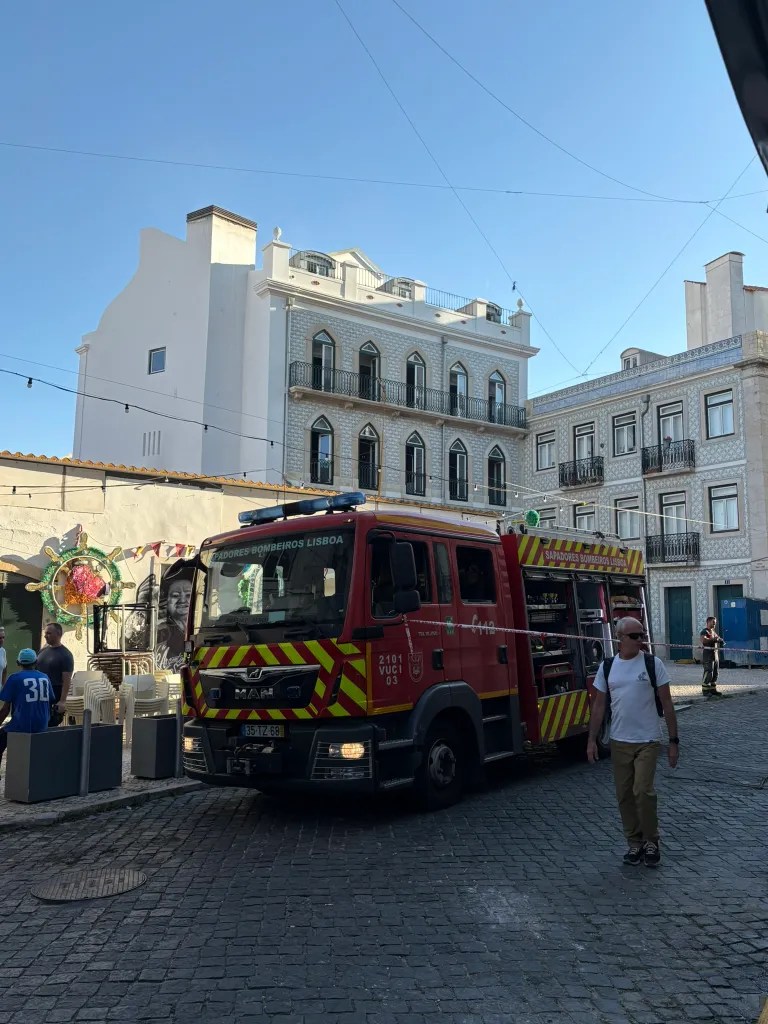
Considering the city’s long and sometimes tragic history with earthquakes and fires, it was a reminder that behind all the beautiful architecture and tourist attractions are people working every day to keep this historic city safe.
But enough about history and hills.
Let’s get back to the food!
Piri-Piri Chicken: Sometimes Simple Is Spectacular
Lisbon’s food scene was incredible.
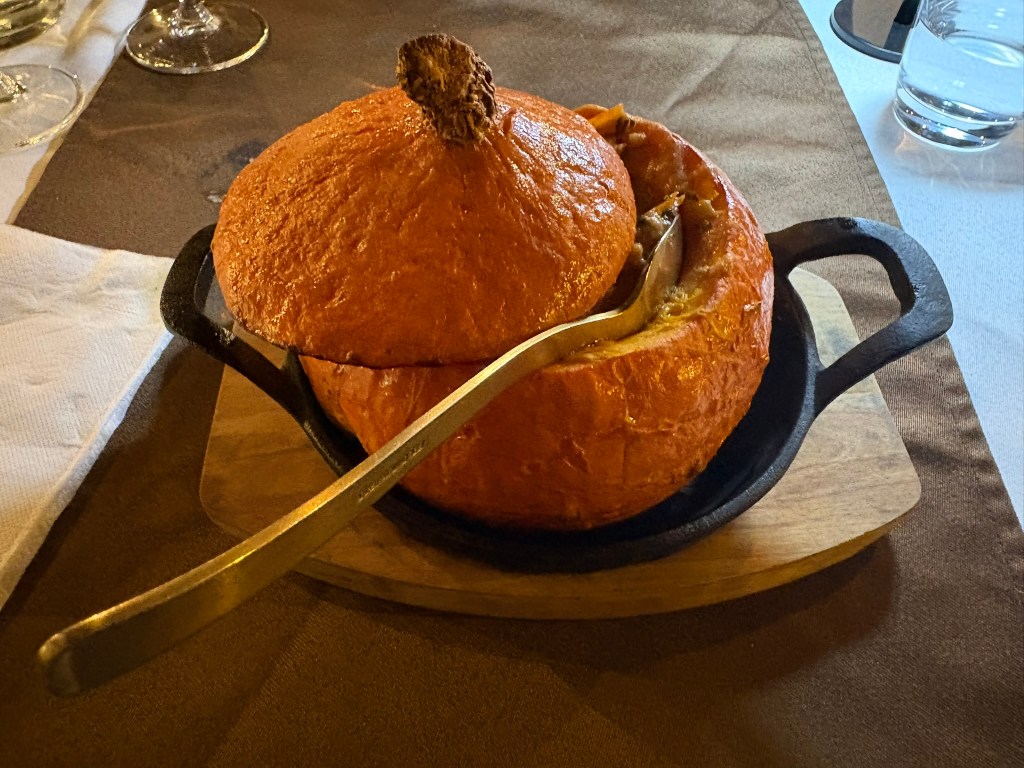
At one point, I found myself eating prawns served inside a baked pumpkin. Was it traditionally Portuguese? Probably not. Was it outstanding? Absolutely!
But two things really stole the show during our stay.
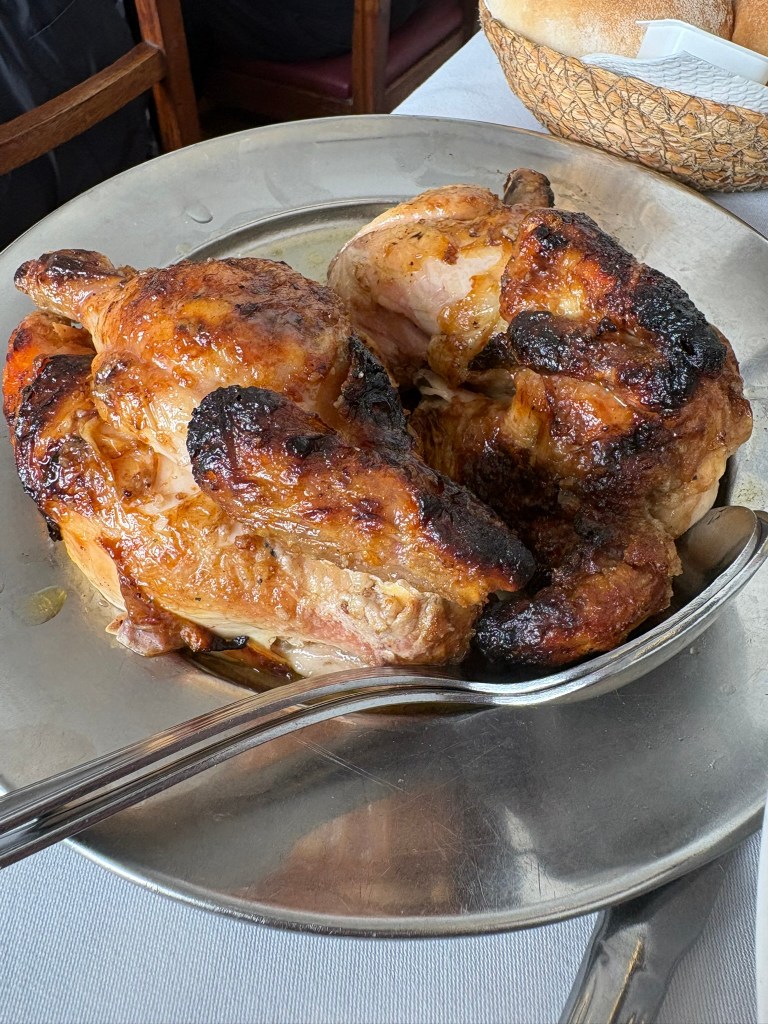
The first was Piri-Piri Chicken.
Now, if you’re unfamiliar with piri-piri, it’s a small, fiery chili pepper with roots in Africa that became an important part of Portuguese-influenced cooking. The name is commonly associated with spicy sauces made with chilies, garlic, oil, lemon, and other seasonings.
Portugal’s famous grilled chicken, often called frango assado or frango piri-piri, takes beautifully roasted or grilled chicken and pairs it with a flavorful chili sauce.
Simple concept, right?
Well, when it’s done correctly, it’s absolutely spectacular.
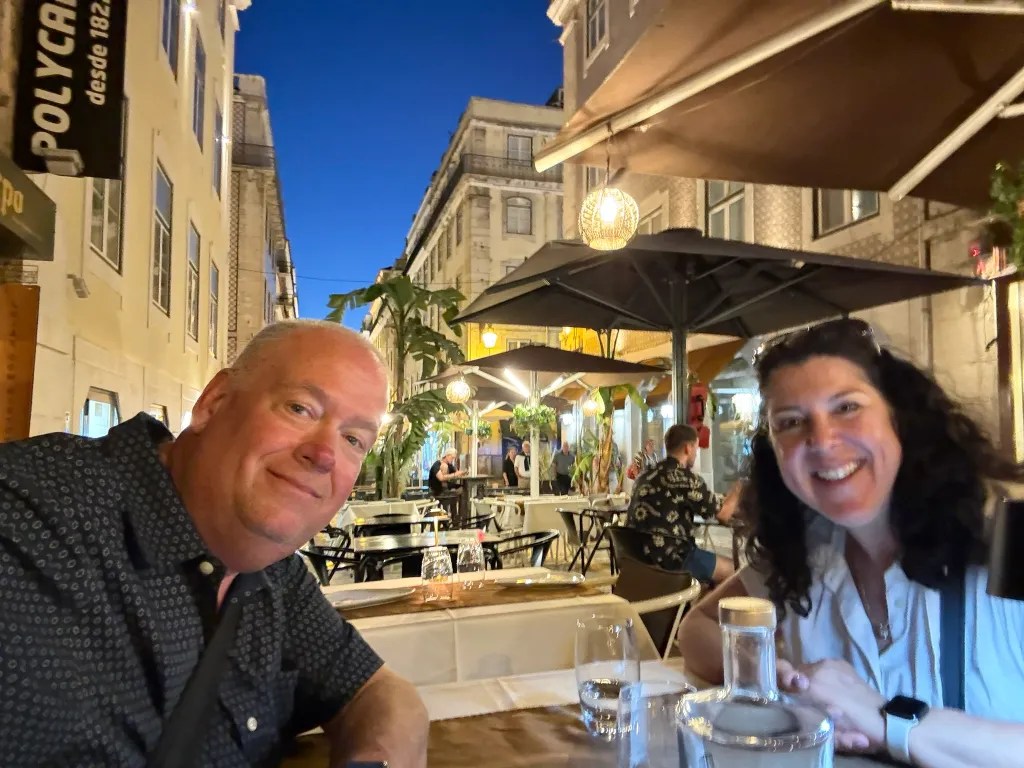
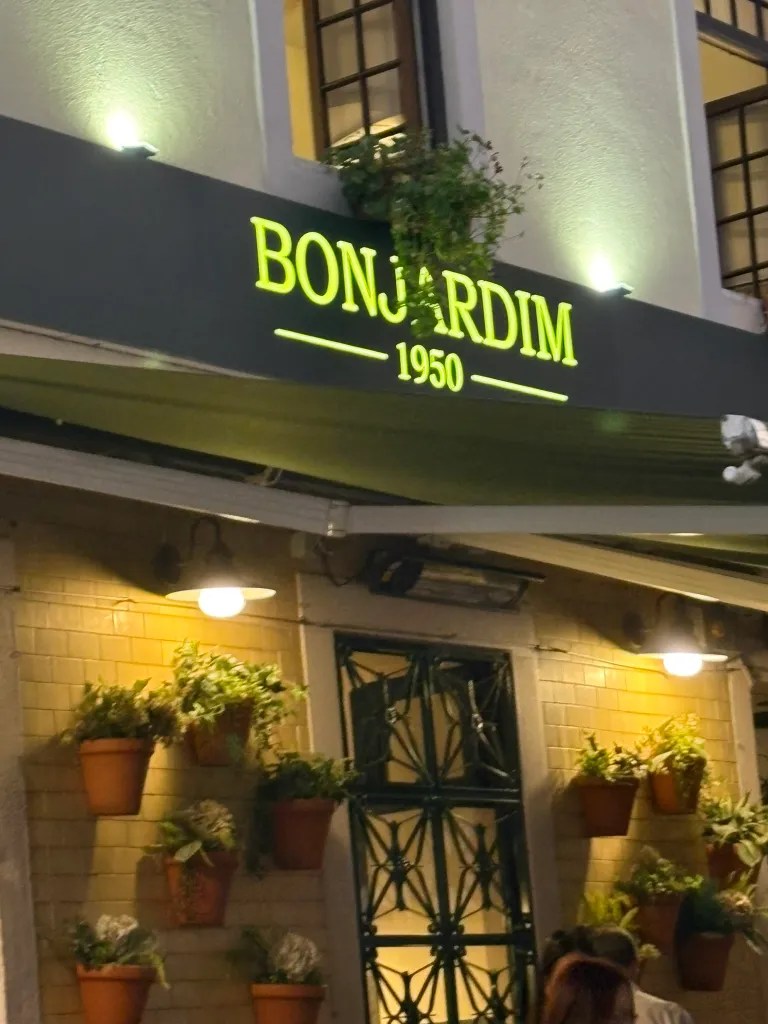
And according to our food tour guide, if you want some of the best chicken in Lisbon, you head to a place called Bonjardim.
So naturally, that’s exactly what we did!
Bonjardim is a Lisbon institution dating back to 1959, famous for its spit-roasted chicken and closely guarded house sauce. It’s the kind of place where the specialty isn’t buried on page six of an enormous menu.
The chicken IS the reason you’re there.
We were lucky enough to score a table, and I can confidently say that I don’t think I’ve ever had better chicken anywhere.
It was unbelievably moist, tender, and packed with flavor. The skin was beautifully roasted, and the seasoning and sauce brought everything together without overpowering the chicken itself.
No elaborate presentation. No culinary gymnastics. Just perfectly prepared food.
Sometimes the simplest dishes are the hardest to get right.
And Bonjardim absolutely nailed it.
Pastel de Nata: Portugal’s Little Bite of Heaven
Now, we need to talk about dessert.
Specifically, Pastel de Nata.
If Portugal had an official national pastry, this little beauty would certainly be a leading candidate.
A pastel de nata is a small Portuguese custard tart consisting of a crisp, flaky pastry shell filled with rich, creamy egg custard, baked at high temperatures until the top develops those characteristic golden-brown, slightly caramelized spots.
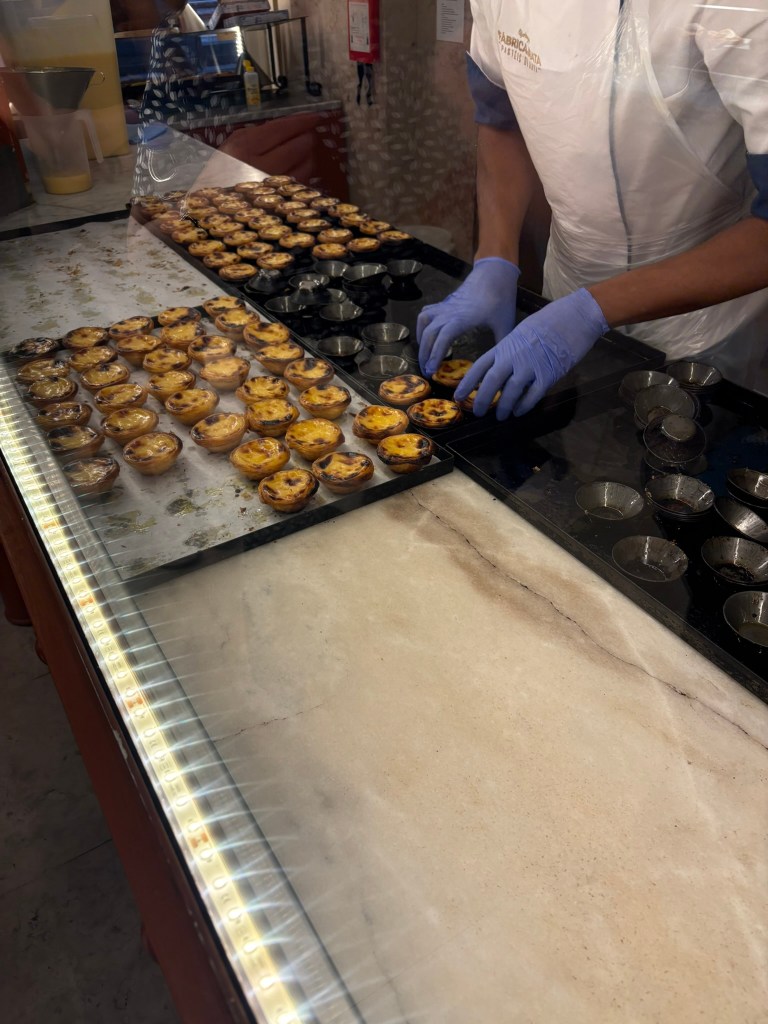
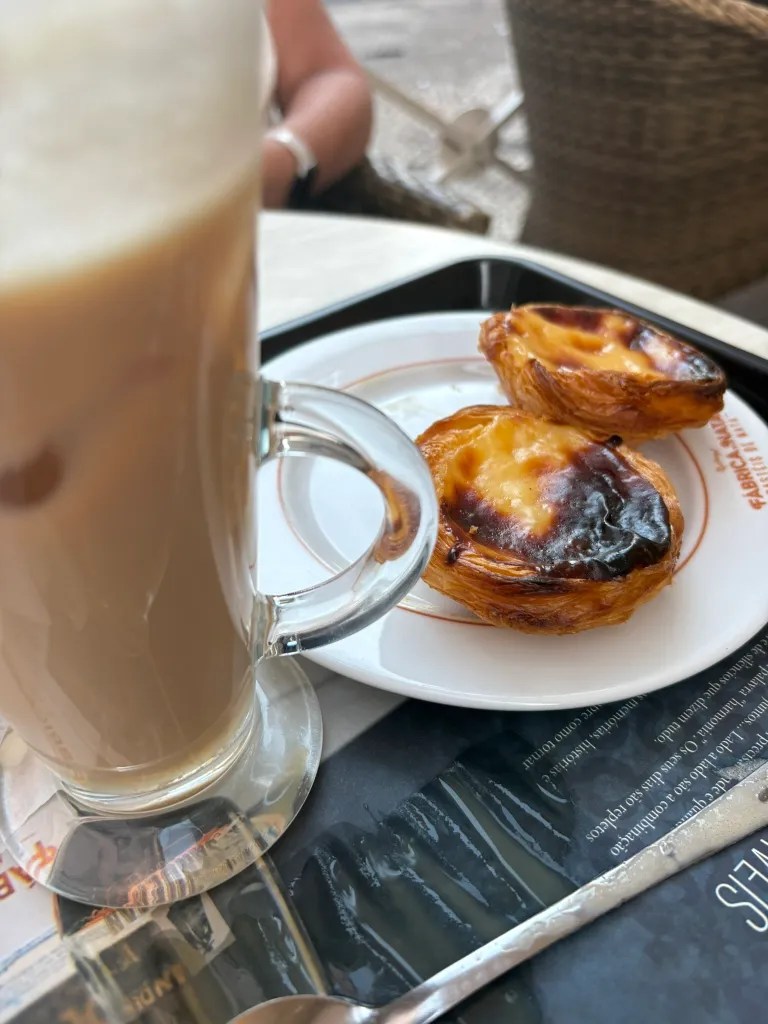
Often served warm with a dusting of cinnamon, it’s the perfect combination of crunchy, creamy, sweet, and buttery.
And like many of Europe’s great foods, it comes with a fascinating history.
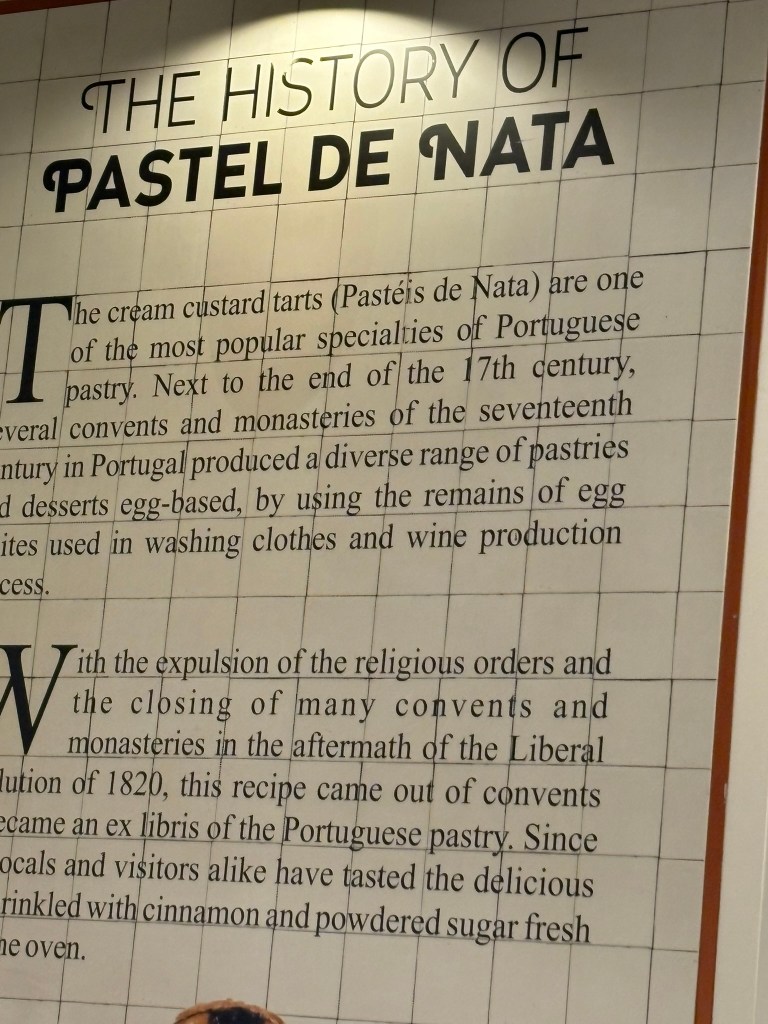
The pastry is closely associated with the monks of Lisbon’s Jerónimos Monastery. Centuries ago, monasteries frequently used egg whites for starching religious garments, leaving an abundance of egg yolks that found their way into all sorts of delicious pastries.
When Portugal dissolved its religious orders in the 1830s, the monastery closed, and its famous pastries began being sold through a nearby shop.
In 1837, the bakery now known as Pastéis de Belém began producing the pastries using a secret recipe associated with the monastery. That bakery is still operating today, and its recipe remains a closely guarded secret.
Now, apparently, the original bakery is so popular that the lines can be enormous.
And while I appreciate culinary history, I also appreciate not spending half my vacation standing in line for a pastry.
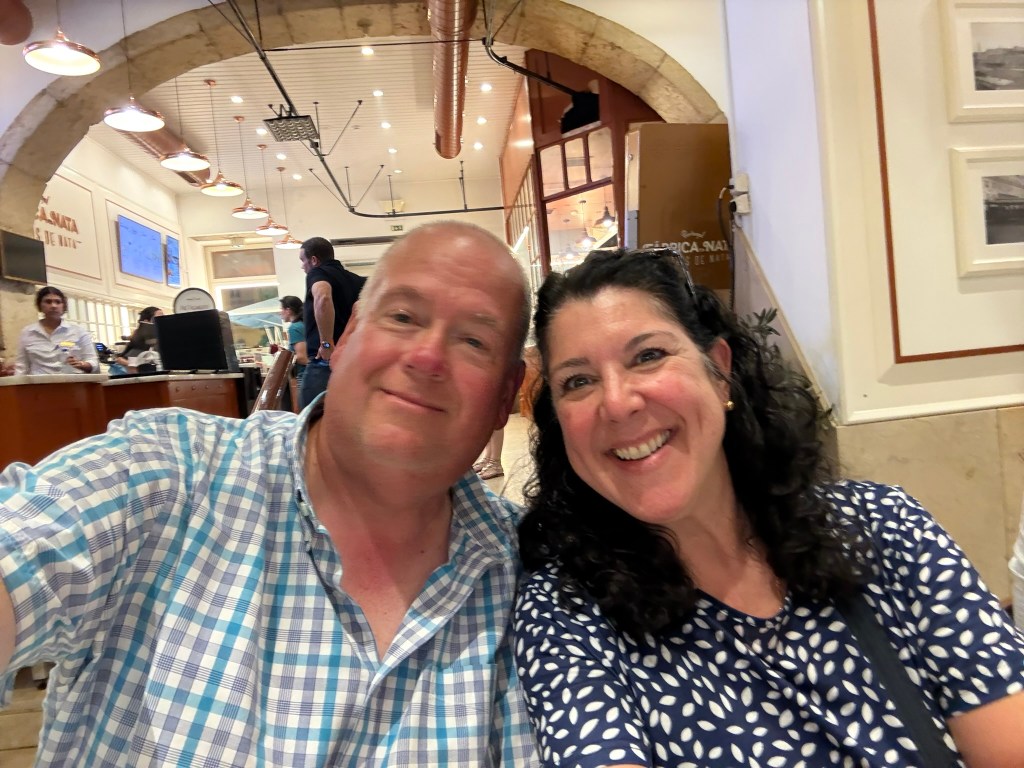
Fortunately, our food tour guide pointed us toward Fábrica da Nata, which he described as one of the best places in Lisbon to enjoy these little treasures without waiting forever.
And they were fantastic!
But here’s the funny thing about pastel de nata.
I had one at a highway rest stop.
Fantastic!
I had them at our hotel breakfast in the Algarve.
Fantastic!
And then we had them at Fábrica da Nata.
Also fantastic!
I’m beginning to think Portugal simply doesn’t know how to make a bad custard tart.
And frankly, I admire that kind of consistency.
So… About That Post-Vacation Depression
When I started writing this week’s blog, my intention was to take you through our entire European adventure in one post.
Portugal, Florence, Tuscany, Bologna… the whole thing.
But clearly, I got a little carried away talking about Portugal!
And you know what? I’m okay with that.
Because Portugal deserves its own story.
From the breathtaking limestone cliffs of the Algarve to the historic streets and endless hills of Lisbon, this country completely exceeded our expectations.

The scenery was magnificent. The people were welcoming. The history was fascinating. And the food?
Well, I think I’ve made my feelings about the food pretty clear!
But perhaps the best part was getting to experience all of it with Maria.
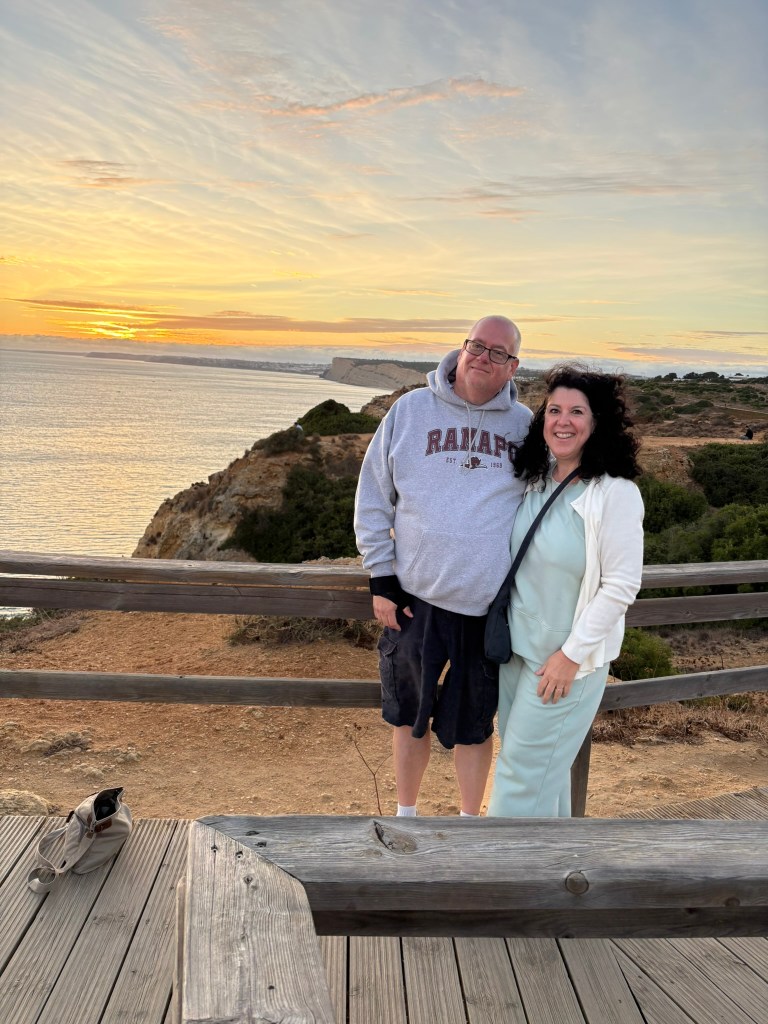
After years of raising kids, juggling work, managing schedules, and doing all the things that come with family life, it was wonderful to have some time to simply be a couple again.
To explore somewhere new, discover new foods, share a glass of wine, get lost in unfamiliar streets, and occasionally argue about whether Google Maps was trying to kill us by sending us up yet another hill.
Those are the moments that make travel so special.
So, no recipe this week. Instead, I hope you’ve learned a little something about the beautiful culture and incredible food of Portugal.
And more importantly, I hope I’ve inspired you to add Portugal to your travel bucket list if it isn’t already there.
Trust me, it’s worth the trip.
Next week, we’re heading to Italy!
I’ll take you on a culinary tour — or perhaps more accurately, a wine tour — of Florence, Montepulciano, and Bologna.
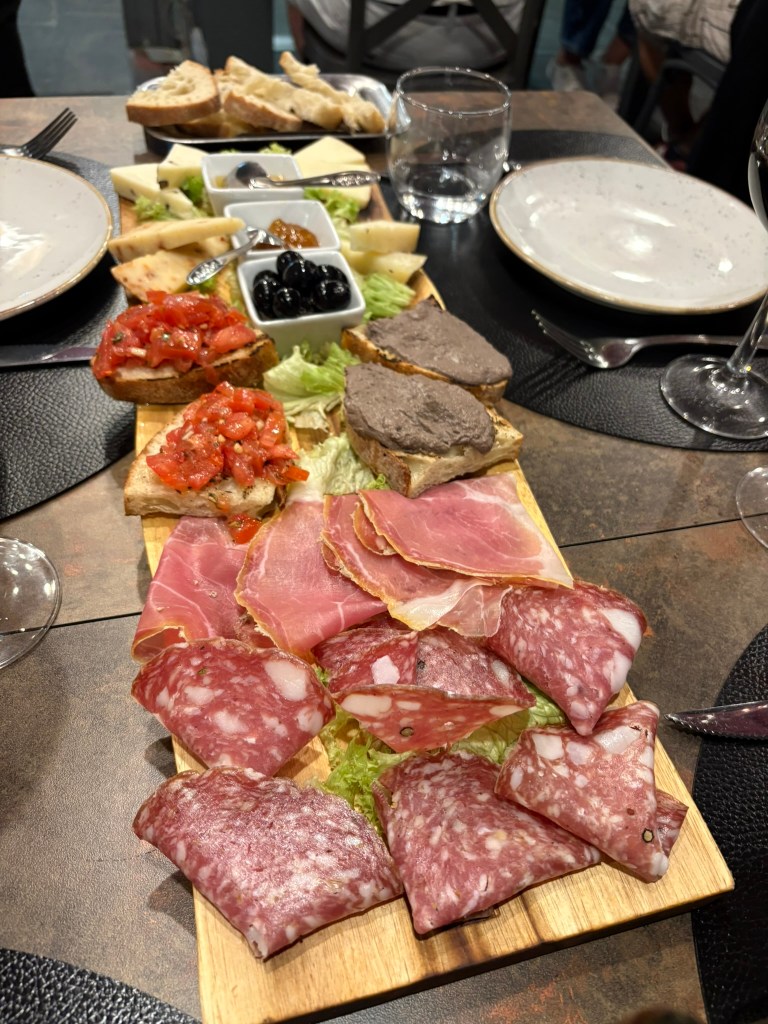
There will be pasta. There will be wine. There will be history.
And knowing me, there will probably be a few more stories about getting lost.
Until next time, keep exploring, keep eating, and never pass up the opportunity to discover something delicious!
Salute!


Leave a Reply