Well…it’s over.
By every measurable statistic, the summer of 2026 was a resounding success.

The FIFA World Cup featured 104 matches across the United States, Canada, and Mexico, drawing a record 6.81 million spectators into stadiums around the world. Eight of those matches were played at MetLife Stadium in East Rutherford, bringing more than 640,000 fans to the stadium alone, not counting the 100’s of watch party attendees. At the same time, America’s 250th Birthday celebrations, combined with Sail250 and countless semi quincentennial events, drew an estimated 6–8 million people to the greater New York–New Jersey region.
Those numbers are how most people define success.
Not me.
For the past year, planning for these events has been one of the most challenging and rewarding experiences of my career. As part of the Emergency Management team at one of the largest health networks in New Jersey, there were days filled with uncertainty, long meetings, contingency plans, weather briefings, security concerns, and enough “what if” scenarios to keep anyone awake at night.
But I never carried it alone.
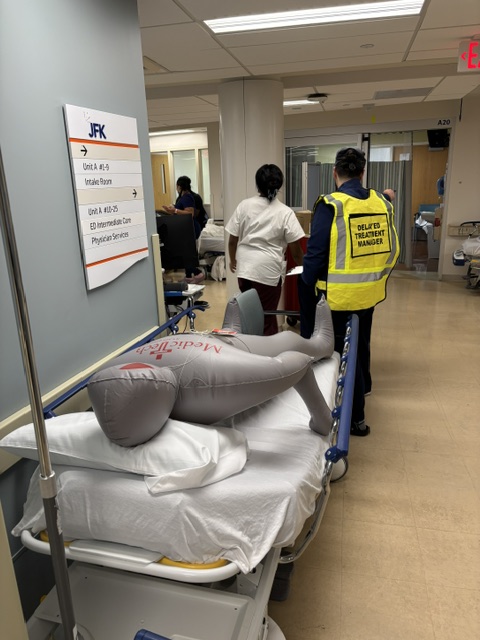
Even with our small-but-mighty Emergency Management team, this was truly a network-wide effort. Leaders from every corner of the network came together with a common purpose: make sure we were ready for whatever the summer might bring.
And it did bring plenty.
Two heat waves.
Torrential rain that, at times, felt like enough to float an ark.
Hundreds of thousands of visitors.
Millions celebrating across our region.
Yet through it all, our hospitals continued doing what they do every single day: caring for people.
That’s my definition of success.
Not that nothing happened.
But that we were prepared if it did.
Because the greatest compliment an emergency manager can receive is that no one notices you were there.
When preparation quietly becomes performance, everyone else simply gets to enjoy the event.

Now that it’s over?
I’m spending a few days in my happy place.
No…not Europe.
Maybe my second favorite place on Earth.
The Jersey Shore.


There’s something restorative about this place that I can’t quite explain. The salt air. The rhythmic sound of the waves. The warmth of the morning sun before the beaches fill. By nine o’clock this morning, I’d already walked four miles. Even breakfast seemed better.


Maybe it’s the Vitamin D.
Maybe it’s the sea breeze.
Or maybe Bruce Springsteen had it right all along.
“Down the shore everything’s all right.”
As I sit on the porch with white clouds drifting overhead and the ocean breeze carrying that familiar smell of salt water, I’m finally allowing myself to slow down.
To breathe.
To reflect.
To appreciate what we accomplished together over the past year.
The Jersey Shore has always had a way of restoring the mind, the body, and the spirit.
One thing I never stopped doing this summer was cooking.
Most of it happened outside, tending the smoker or standing over a grill with family and friends. But recently, on one of those rainy afternoons, I wandered back into the kitchen and spent several quiet hours making one of Italy’s greatest comfort foods:
Ragù alla Bolognese.
Notice I didn’t call it “spaghetti Bolognese.”
Because in Bologna, Italy, that dish doesn’t really exist.
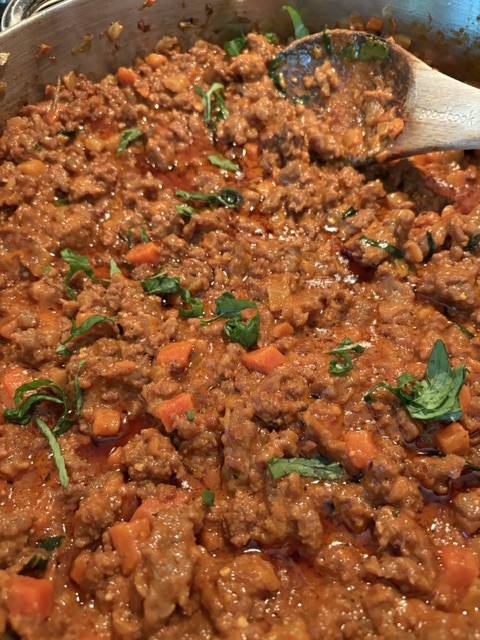
The Real Story of Ragù alla Bolognese
Ragù alla Bolognese was born in the city of Bologna, in Italy’s Emilia-Romagna region, where rich dairy, cured meats, and slow-cooked cuisine define the local table. The earliest written versions date back to the late eighteenth century, evolving over generations into the recipe that became synonymous with the city.
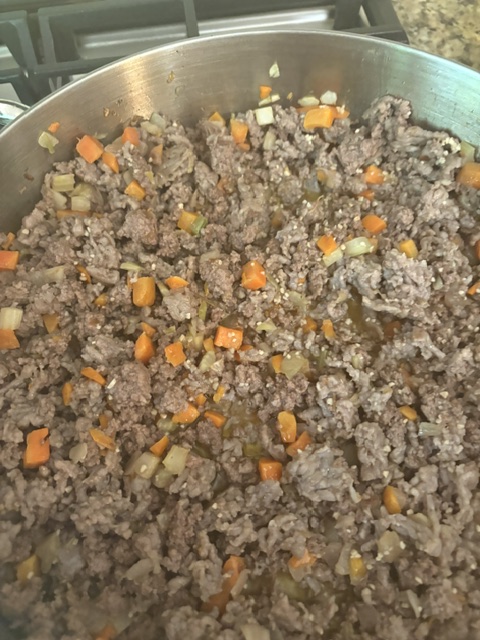
Unlike the tomato-heavy meat sauce many Americans grew up eating, authentic ragù is first and foremost a meat sauce. Tomatoes play only a supporting role, adding balance rather than dominating the flavor. The sauce begins with a soffritto of onion, carrot, and celery cooked gently in butter or olive oil. Ground beef, often with a bit of pork or pancetta—is slowly browned before being enriched with white wine, a touch of milk, and just enough tomato paste or passata to bring everything together.
Then comes the most important ingredient:
Time.
Three or four hours of gentle simmering transform simple ingredients into something extraordinary.
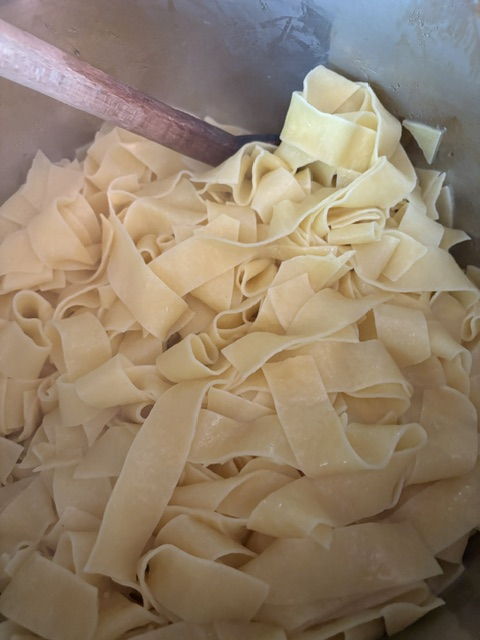
Traditionally, ragù is served with fresh tagliatelle, whose broad ribbons capture the rich sauce beautifully. It is also the classic filling for lasagna in Bologna. You won’t often find it served over spaghetti in its hometown.
Sometimes, the most authentic dishes are also the simplest.
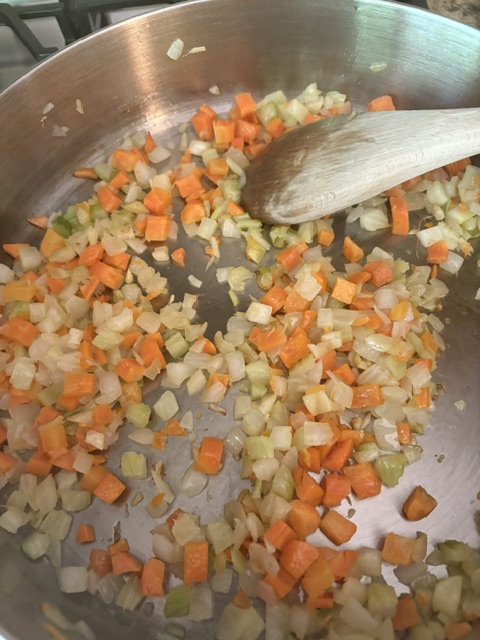
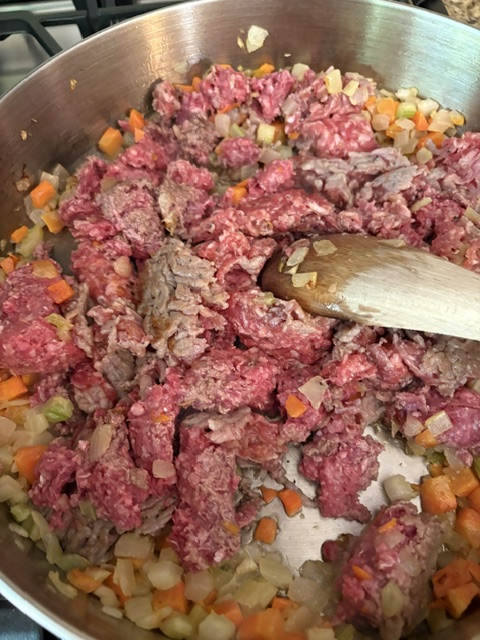
Authentic Ragù alla Bolognese
Ingredients
- 2 tablespoons unsalted butter
- 2 tablespoons extra-virgin olive oil
- 1 medium onion, finely diced
- 1 carrot, finely diced
- 2 celery stalks, finely diced
- 3 ounces pancetta, finely minced
- 1 pound ground beef (80–85% lean)
- ½ pound ground pork (I use Italian Sausage)
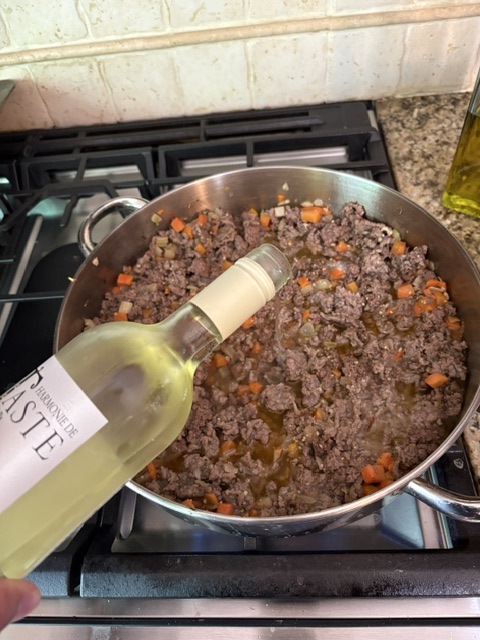
- 1 cup dry white wine
- 1 cup whole milk or cream
- 2 tablespoons tomato paste
- 1 cup beef broth
- Freshly grated nutmeg (a pinch)
- Salt and freshly ground black pepper
- Parmigiano Reggiano, freshly grated
Instructions
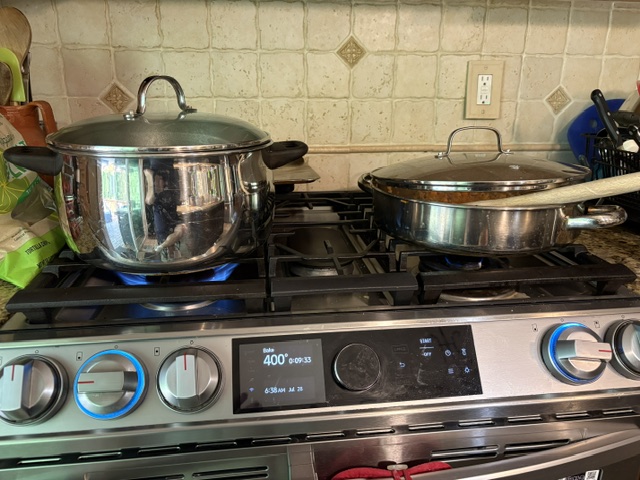
- Heat the butter and olive oil over medium-low heat in a heavy Dutch oven.
- Add the onion, carrot, and celery. Cook gently for 10–15 minutes until soft but not browned.
- Stir in the pancetta and cook another 5 minutes.
- Add the beef and pork, breaking the meat into small pieces as it browns.
- Pour in the white wine and cook until nearly evaporated.
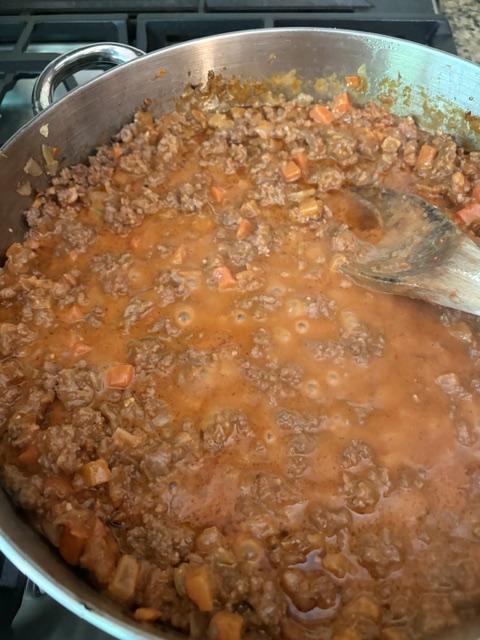
- Stir in the milk and let it slowly reduce. This softens the acidity of the meat and gives the ragù its characteristic richness.
- Mix the tomato paste with the beef broth and add it to the pot. Season lightly with salt, pepper, and a pinch of nutmeg.
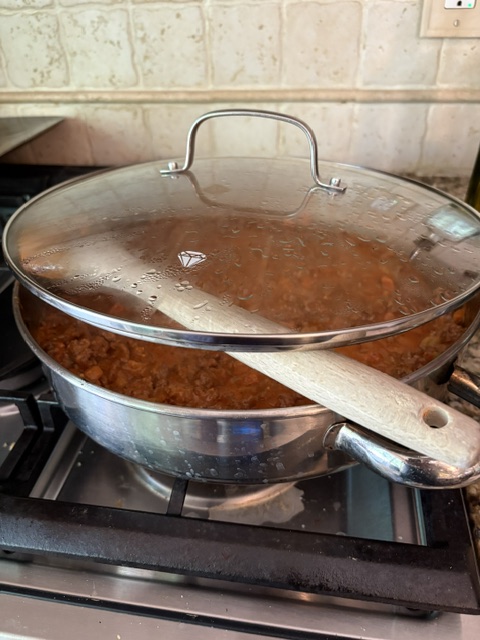
- Cover partially and simmer on the lowest possible heat for 3–4 hours, stirring occasionally. If the sauce becomes too thick, add a splash of broth or water.
- Taste and adjust the seasoning before serving over fresh tagliatelle, finished with generous shavings of Parmigiano Reggiano.
No sugar.
No garlic.
No oregano.
No basil.
No mountain of tomatoes.
Just patience.
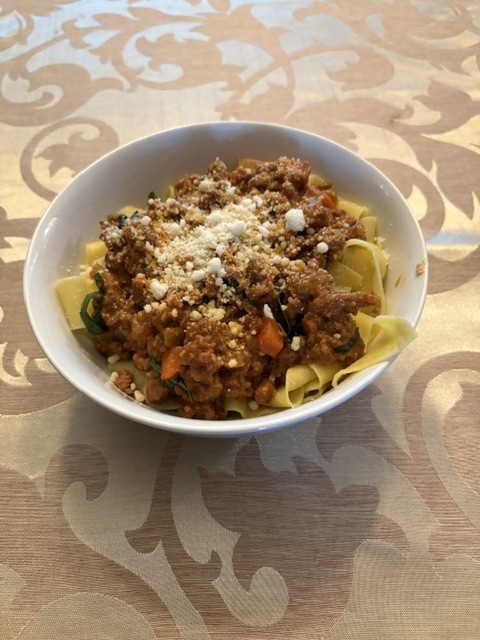
Maybe that’s why this dish felt so appropriate this week.
Like emergency preparedness, good ragù isn’t about flashy ingredients or dramatic moments.
It’s about doing the little things well, trusting the process, and understanding that the best results come from time, care, and quiet attention.
And after a year spent preparing for one of the biggest summers New Jersey has ever seen, slowing down over a pot of slowly simmering ragù and a few days at the Jersey Shore feels exactly right.
Because, as Bruce reminds us…
Down the shore, everything’s all right.


Leave a Reply