Flour, Water, and a Little Family Chaos: How We Learned to Make Pasta
There’s something quietly magical about turning flour and liquid into pasta. Just two ingredients—sometimes three—and suddenly you’ve got a dough that can become silky ribbons, pillowy pockets, or chewy curls. But like most things in Italy, it’s not that simple.
Fresh pasta isn’t a one-size-fits-all operation. Depending on where you are in Italy, the dough might be made with eggs, or it might not. It might use soft 00 flour, or coarse semolina. It might be cut by hand or extruded through bronze dies. And in my kitchen? It definitely involves a KitchenAid fitted with a pasta roller, a light layer of flour coating the counter (and maybe the dog), and plenty of laughter as we try not to jam the dough.

North vs. South: A Pasta Dough Divide
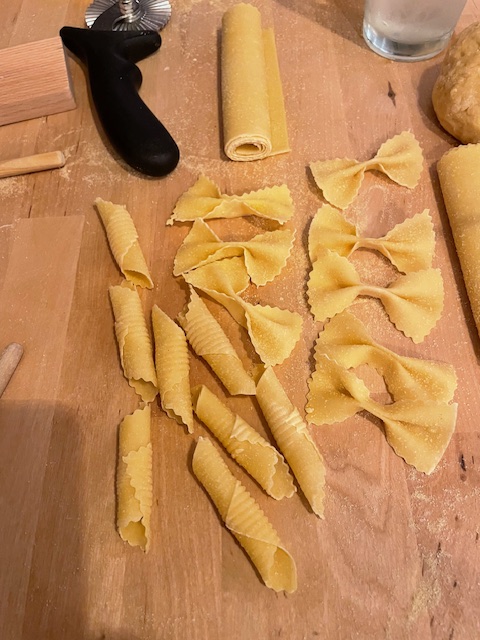
In Northern Italy—think Emilia-Romagna, Piedmont, and Lombardy—fresh pasta is often made with soft wheat flour (Tipo 00) and plenty of eggs. The dough is rich and golden, yielding tender tagliatelle, silky ravioli, and those famously plump tortellini. Eggs were a sign of prosperity, and the cooler northern climate made them easier to store and safer to use.
Head south to regions like Puglia, Calabria, and Sicily, and you’ll find pasta made with just semolina flour and water—no eggs at all. This dough is firmer, chewier, and designed to withstand drier air and longer shelf life. It’s shaped into orecchiette, cavatelli, or trofie by hand and served with bold, rustic sauces full of garlic, anchovies, tomatoes, and greens. The approach was born from necessity—and it’s as resilient as the people who created it.
Today, with global pantries and modern tools, we can make either dough no matter where we live. But the traditions behind them? That’s the real flavor.

A Birthday Gift That Stuck (to Everything, Including Us)
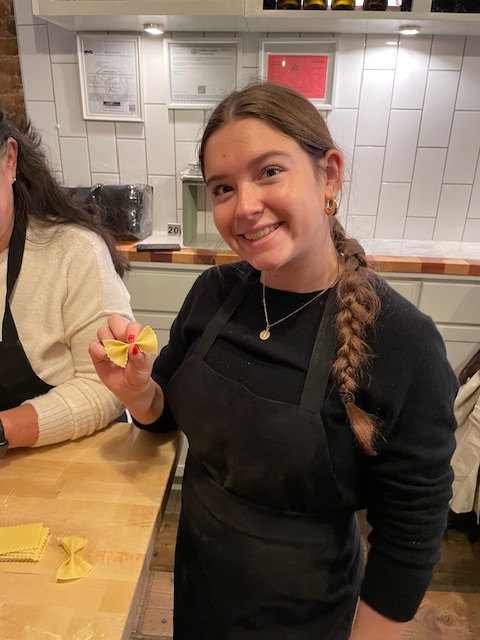
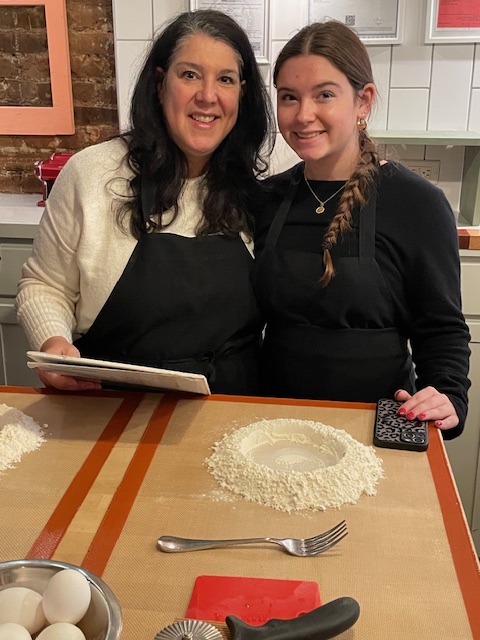
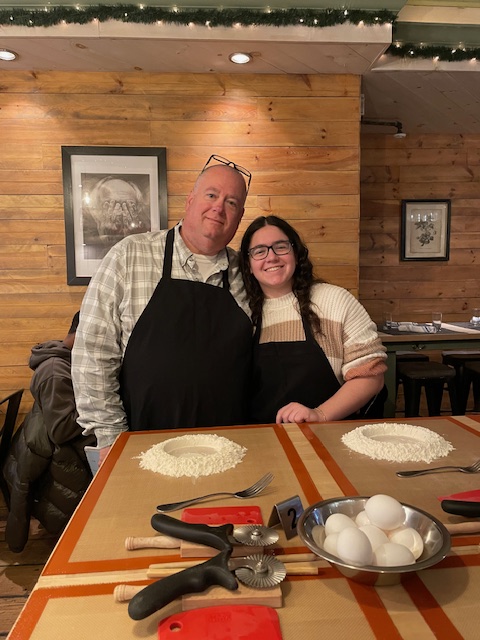
About a year ago, we decided to stop giving each other “stuff” for birthdays and holidays. With two college-aged daughters and the house slowly emptying out, we realized the best gifts were the ones we shared. Experiences, not things. So for my wife’s birthday, we gave her a pasta-making class in Manhattan—part family bonding, part carb-fueled adventure.
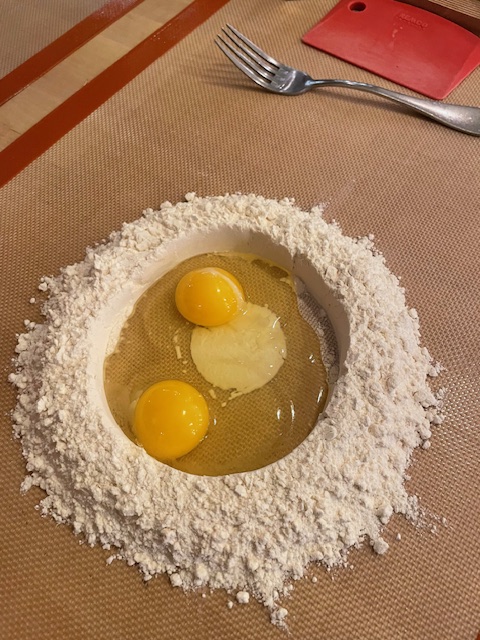
It was everything we hoped it would be. Flour flying, eggs cracked into little flour volcanoes, dough kneaded at tiny tables. There was wine (thankfully), laughter, and pasta that may not have looked perfect, but it tasted like joy.
Since then, pasta-making has become a bit of a ritual. We still knead the dough by hand—it’s part meditation, part upper-body workout—and then we let the KitchenAid roller attachment do the heavy lifting. It’s not exactly an Italian nonna’s method, but it brings us back to that little pasta restaurant in Manhattan and reminds us why we started doing this in the first place: because memories don’t go out of style, and pasta is always a good idea.
Two Pasta Doughs, Two Traditions
Egg Pasta Dough (Northern Style)
Best for: Tagliatelle, Fettuccine, Ravioli
- • 2 cups 00 flour (or all-purpose if that’s what you’ve got)
- • 3 large eggs
- • Pinch of salt
- 1. Mound the flour on a clean surface and make a well in the center. Add eggs and salt.
- 2. Use a fork to gradually incorporate flour into the eggs until a shaggy dough forms.
- 3. Knead by hand for 8–10 minutes, until the dough is smooth and elastic.
- 4. Wrap and rest at room temp for 30–60 minutes before rolling and cutting with a pasta machine or KitchenAid roller.
Semolina Water Dough (Southern Style)
Best for: Orecchiette, Cavatelli, Trofie
- • 2 cups semolina flour (rimacinata if possible)
- • ¾ cup warm water
- • Pinch of salt
- 1. Combine flour and salt in a bowl or on a work surface. Slowly mix in water until a dough forms.
- 2. Knead by hand for 10 minutes, until the dough is smooth and firm.
- 3. Cover and let rest for at least 30 minutes.
- 4. Shape by hand—no machine needed.
Whether you’re cracking eggs or just adding water, making pasta from scratch is about more than dinner. It’s about connection—to heritage, to family, and to each other. And sometimes, the best gift isn’t wrapped in a box—it’s wrapped in flour, shaped by hand, and served with a smile.
 Adopted By Pasta