It’s been a while — and I’ve missed all of you.
The holidays came in fast. The house was full again. Winter break meant both girls home. There was a quick trip to Nashville to ring in the New Year. Track meets replaced the beloved gymnastics meets of old, but Maria and I are there every time Gabby jumps. Some things change — showing up doesn’t.





Olivia headed back for the spring semester and decided to minor in Italian. Watching her embrace that part of her culture has been something special. Both girls are now floating the idea of semesters abroad in Florence.
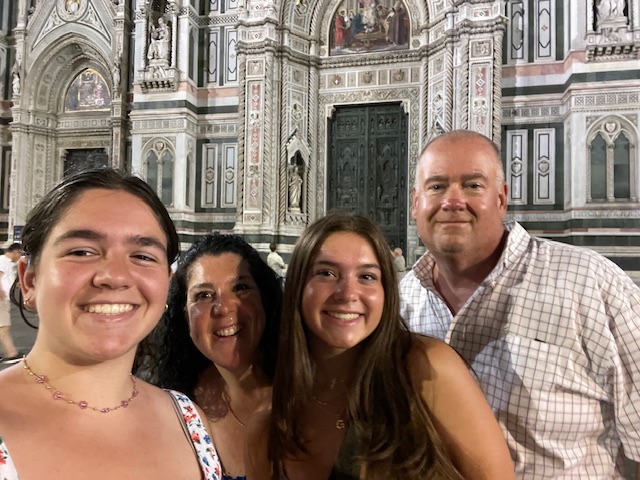
Darn.
I guess Maria and I will have to go to Italy to visit them.
We would love nothing more.
Somewhere in between all of that, I’ve still been cooking. I even made dinner for the first aid squad at one of their meetings. But most nights lately, it’s just Maria and me at the table — still adjusting to that rhythm.
This past weekend, though, I went bold.
Shrimp Diavolo.
Why “Diavolo”?
“Fra Diavolo” literally translates to “Brother Devil” or “Devil Monk.” The name alone feels dramatic enough to demand attention.
There are two origin stories for this fiery dish.
The first is the practical one: Italian immigrants in New York City creating a spicy tomato seafood pasta — bold, inexpensive, unforgettable. A dish born in Italian-American kitchens.
The second story? Much more colorful.
It traces back to Naples and a man named Michele Pezza (1771–1806), a guerrilla leader who fought against the French during the Napoleonic occupation of southern Italy.

Nicknamed Fra Diavolo, he became a folk hero — or a bandit, depending on who you asked. He led insurgent forces in the Kingdom of Naples, was known for daring ambushes, and eventually captured and executed by the French.
Revolutionary.
Rebel.
A little dangerous.
Exactly the kind of personality you’d attach to a dish that bites back.
Whether this pasta truly traces to Naples or to Little Italy in New York, the nickname fits — especially if you’re brave enough to crank up the heat.
Shrimp Diavolo
I started with homemade spaghetti — because that’s just how I am — but a good boxed pasta works beautifully here. Linguine, spaghetti, bucatini… they all hold that spicy sauce like they mean it.
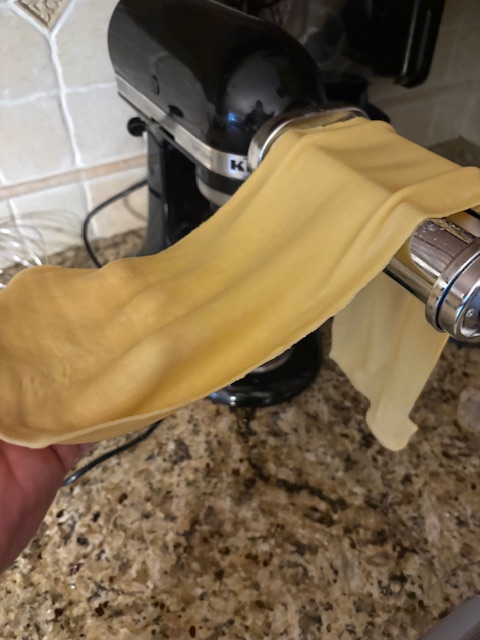
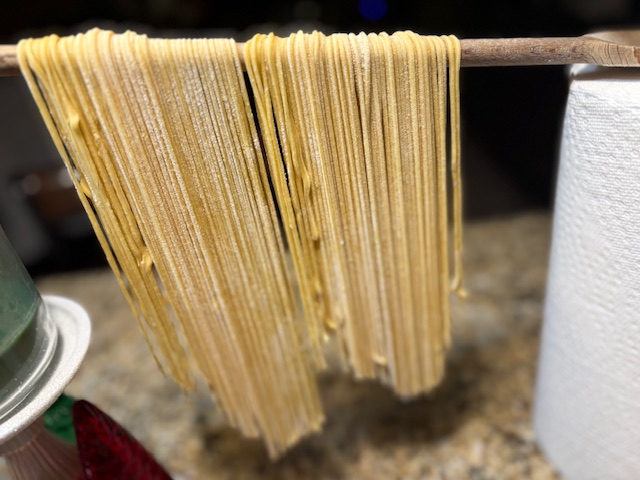
Ingredients
- 1 pound pasta of your choice
- 4 oz pancetta, ¼-inch cubes
- 2 tablespoons olive oil, divided
- 1 pound raw shrimp (I used Argentinian Red Shrimp — incredible flavor)
- 1½ teaspoons coarse salt, divided (plus more to taste)
- ½ tablespoon fresh cracked black pepper
- 1 teaspoon crushed red pepper flakes (or more… if you dare)
- 1 medium shallot, chopped
- 4 cloves garlic, minced
- ½ cup dry white wine
- 1 (28-ounce) can crushed tomatoes (San Marzano if you can find them)
- Zest of 1 lemon
- ¼ cup fresh basil, torn
- ¼–½ cup Pecorino Romano (or similar), to taste
- 2 tablespoons fresh parsley, chopped
The Method
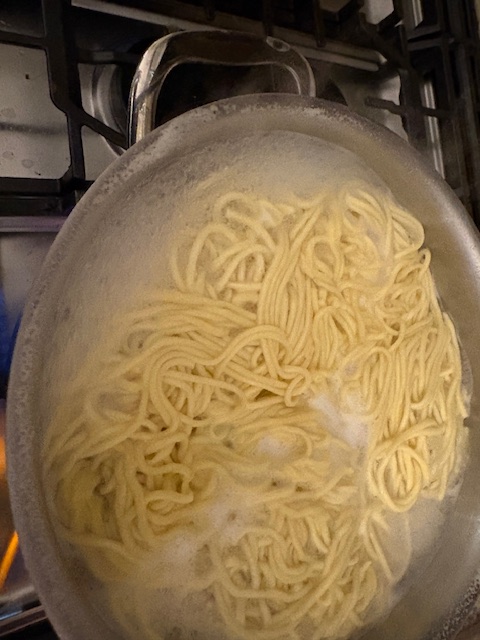
Bring a large pot of well-salted water to a boil and cook the pasta according to package instructions. Before draining, reserve ¼ cup of the starchy cooking water.
In a large skillet over medium-low heat, sauté the pancetta until crisp and golden, about 5 minutes. Remove with a slotted spoon and set aside, leaving the rendered fat in the pan.
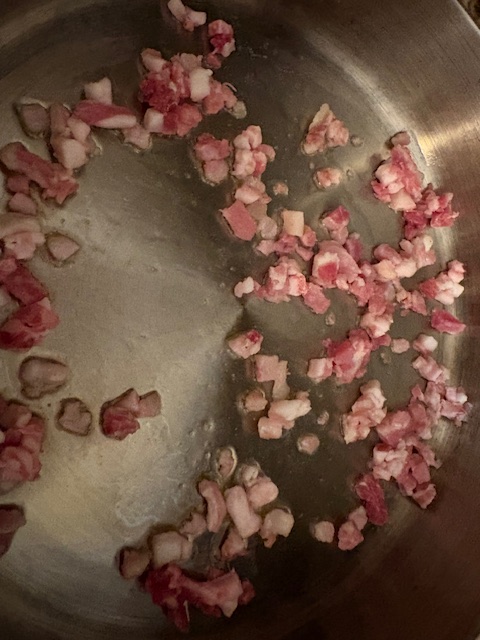
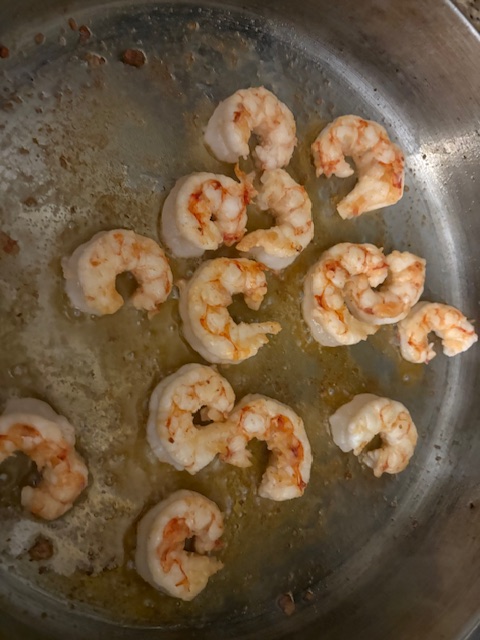
Increase heat to medium and add 1 tablespoon olive oil. Toss the shrimp with 1 teaspoon salt, black pepper, and ¾ teaspoon red pepper flakes. Sear about 2 minutes per side, just until opaque with a golden crust. Remove immediately — overcooked shrimp is a tragedy.
Add remaining olive oil to the pan. Sauté shallot and garlic with remaining salt and red pepper flakes until translucent, about 2 minutes. Watch the garlic carefully.
Deglaze with white wine, scraping up the browned bits.
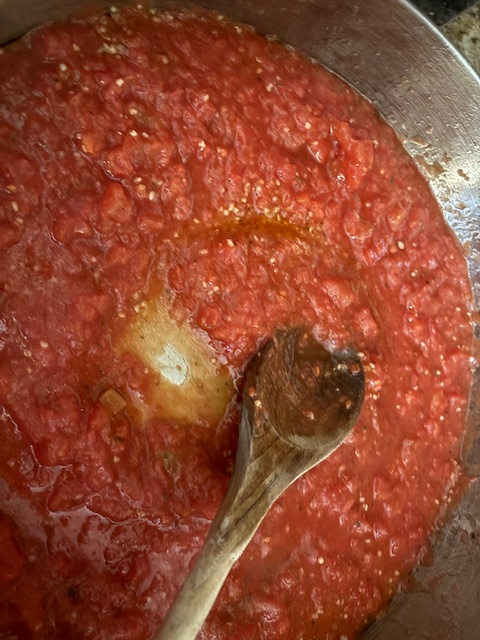
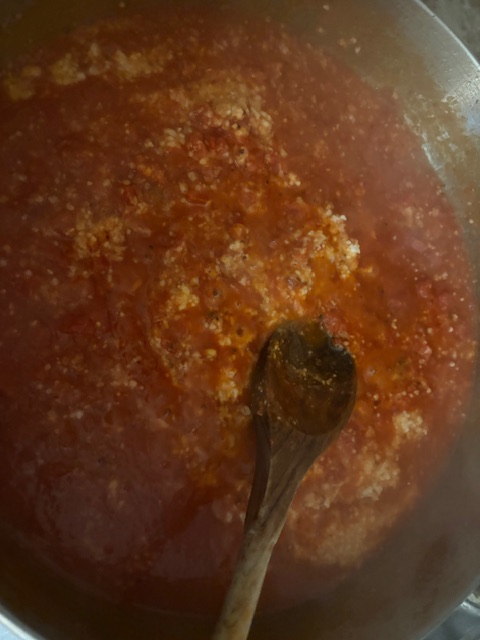
Add crushed tomatoes and simmer about 10 minutes until slightly thickened.
Return pasta to the pan with reserved cooking water, shrimp, pancetta, basil, lemon zest, and cheese. Toss until everything is glossy and coated.
Finish with parsley and more cheese.
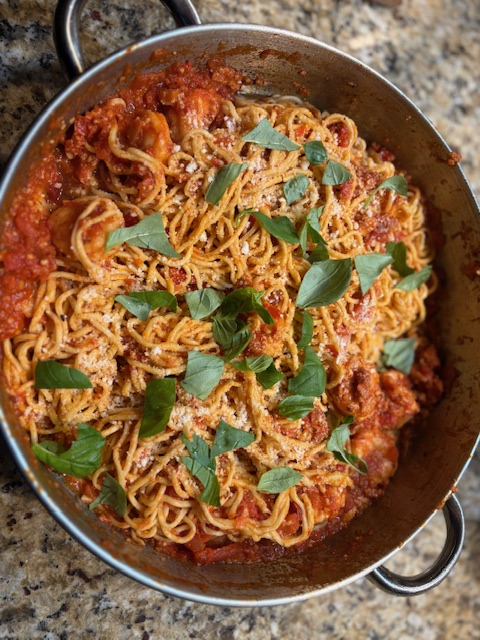
And if you’re feeling brave?
More red pepper flakes.
A Note on Heat
Spice presents itself in many forms, but when it comes to tomatoes, garlic, and pasta, crushed red pepper flakes are the perfect companion.
Not everyone handles heat the same way. If you’re cooking for a crowd, hold back slightly and serve extra flakes on the side. Let the heat-seekers earn their title.
Cooking this dish felt right.
It was bold.
It was alive.
It had just enough edge.
Maybe that’s what this season has been — busy, loud, a little chaotic, but still full of flavor.
I promise I’ll be back to posting more regularly. Even if it’s just Maria and me at the table most nights, the stove is still on.
And sometimes…
it’s cooking with the devil.
 Adopted By Pasta
Leave a comment